
Many women in Hyderabad, Telangana and Andhra Pradesh come to my clinic in their fifties and sixties with back pain, a little loss of height, or a bent posture. Often, the real story began years earlier, at menopause. In this article I explain how menopause and osteoporosis are linked, why the spine is often the first place to be affected, and what every woman can do to protect her bones.
The link: a hormone called estrogen
Estrogen does much more than control periods. It also helps keep bones strong by balancing two processes that go on all our lives: old bone being removed, and new bone being laid down.
After menopause, estrogen levels drop. Bone is then removed faster than it is replaced, and bone loss speeds up for several years. Over time this can lead to osteoporosis, a condition where bones become thin, porous and easy to break.
Some women also notice more joint pain and stiffness around this time.
Why the spine is often affected first
The vertebrae, the bones of the spine, are made largely of spongy inner bone, which responds quickly to the loss of estrogen. Weakened vertebrae can crack or collapse with very little force, such as bending, lifting a bucket, or even a strong cough. This is called an osteoporotic compression fracture.
These fractures can:
- cause sudden back pain, or sometimes almost no pain,
- lead to gradual loss of height,
- cause a rounded upper back (a stoop),
- reduce lung space and appetite when several bones collapse.
You can read more on our page about osteoporotic spine fractures.
Bone loss is silent
Osteoporosis itself does not hurt. Many women learn they have it only after a fracture. That is why early detection matters so much.
Warning signs that deserve a check-up:
- loss of more than 3-4 cm of height,
- a new stoop or rounded back,
- sudden back pain after a minor strain,
- a previous fracture from a simple fall,
- early menopause, a family history of hip fracture, long-term steroid use, smoking, or low body weight.
The bone density (DEXA) test
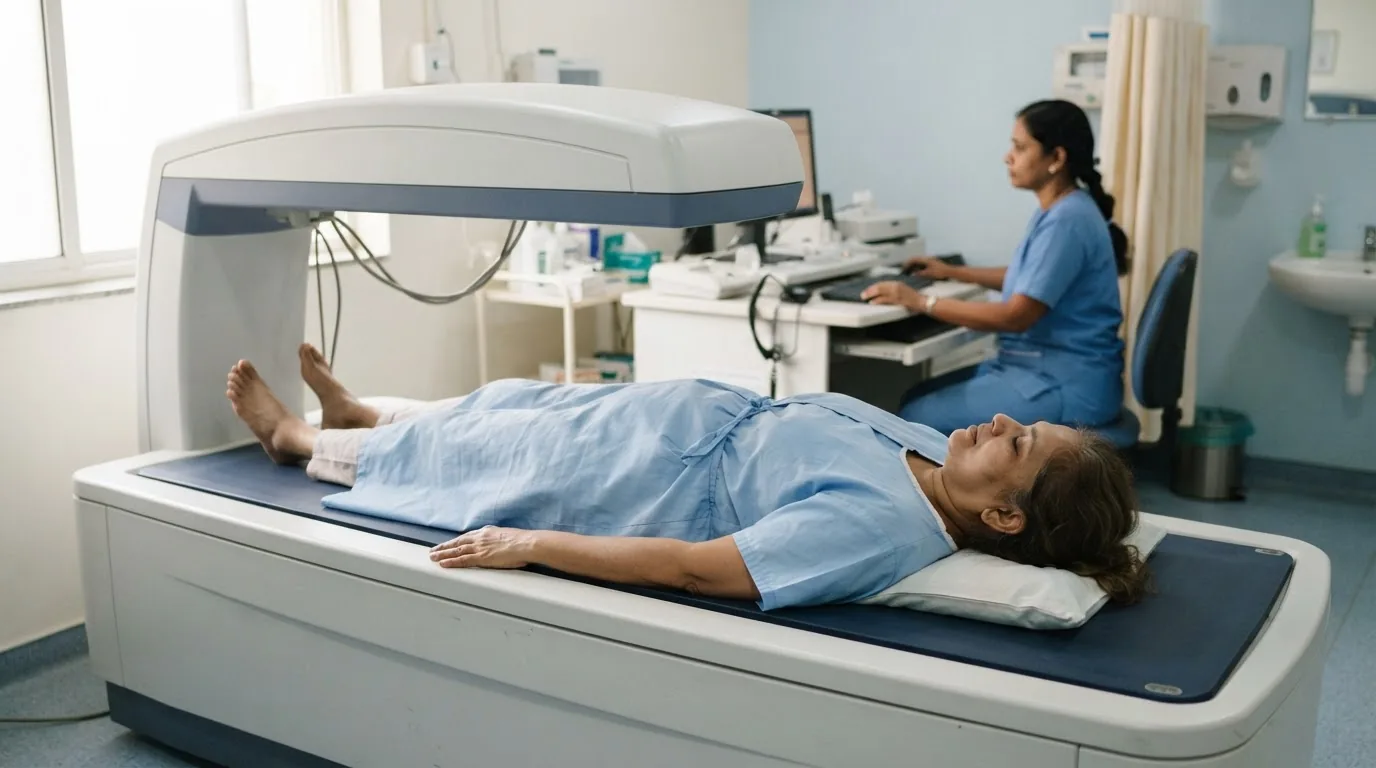
A DEXA scan measures bone density at the hip and spine. It is quick, painless and uses a very small amount of radiation. The result is given as a T-score:
| T-score | Meaning |
|---|---|
| −1.0 and above | Normal bone density |
| Between −1.0 and −2.5 | Low bone mass (osteopenia) |
| −2.5 and below | Osteoporosis |
Your doctor may advise a DEXA scan around menopause if you have risk factors, and for most women from about the age of 65.
What you can do: daily habits that help
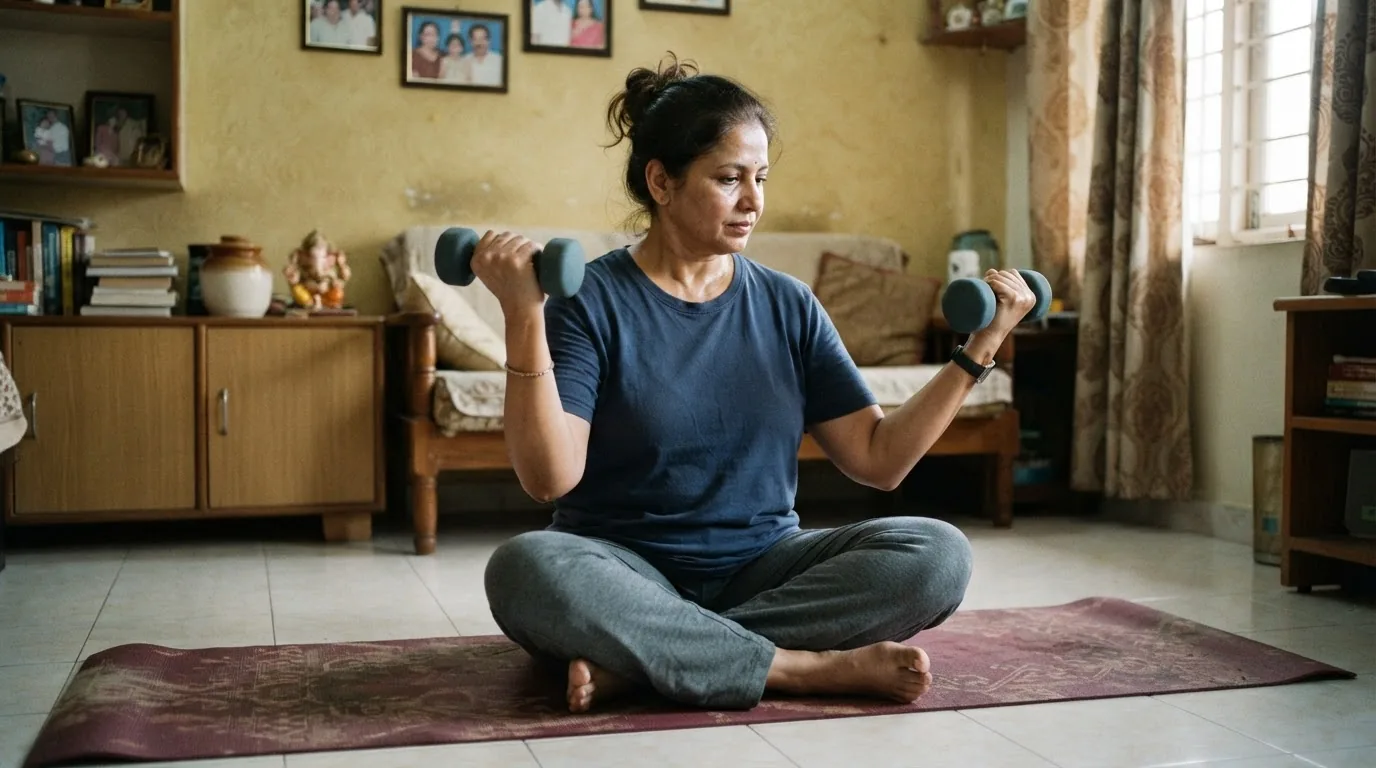
Stay active. Bones get stronger when they carry load.
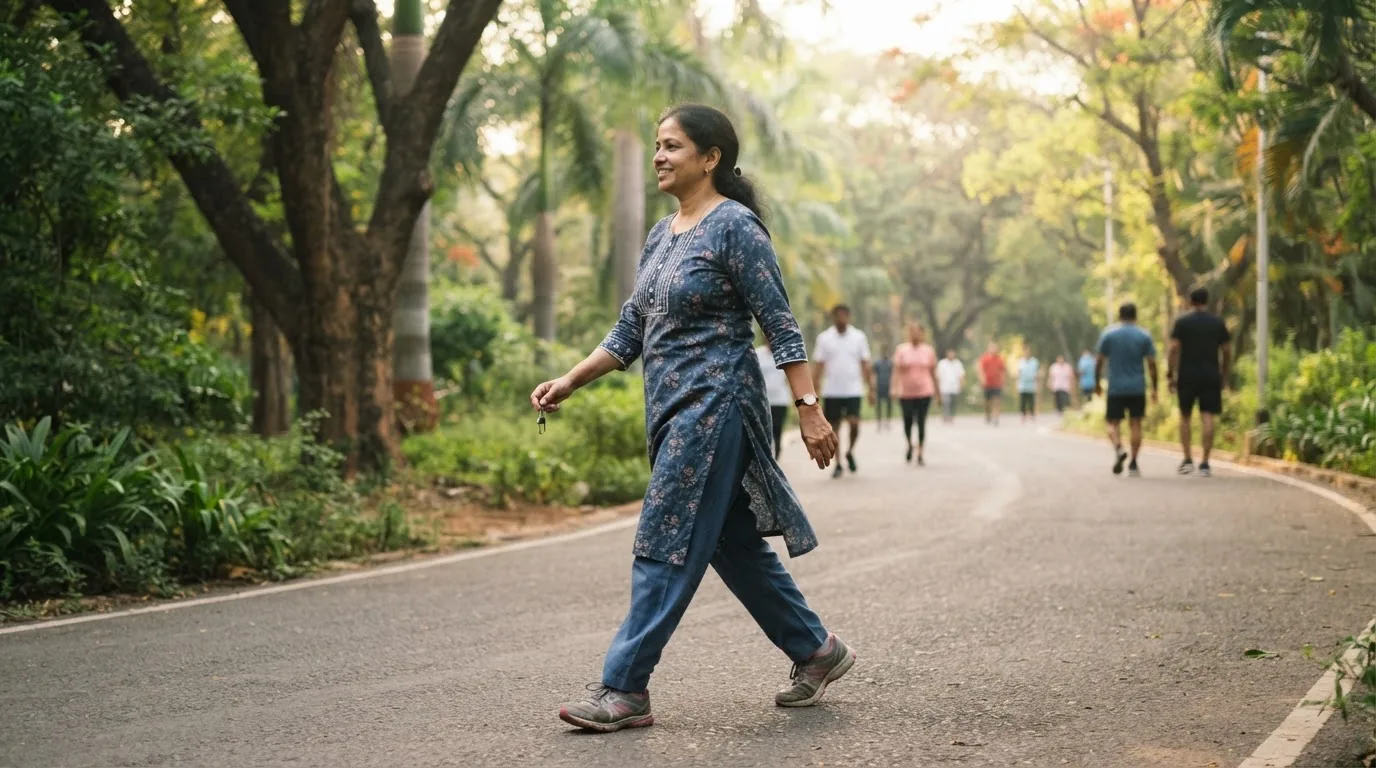
- Walk briskly most days of the week.
- Add strength training two or three times a week: light weights, resistance bands, climbing stairs, or body-weight exercises, learned safely.
- Practise balance exercises to reduce the risk of falls.
Eat for your bones.
- Protein at every meal: dal, paneer, curd, eggs, fish, chicken, sprouts.
- Calcium-rich foods: milk, curd, buttermilk, ragi, sesame (til), green leafy vegetables.
- Vitamin D: safe morning sunlight helps, and your doctor may check your level and advise supplements. Read why vitamin D matters for your spine.
Avoid what weakens bone: smoking, excess alcohol and crash diets.
Prevent falls at home: good lighting, non-slip bathroom mats, grab rails, and comfortable footwear.
Treatment if you already have osteoporosis
If tests show osteoporosis, your doctor may recommend medicines that slow bone loss or help build bone. These need a proper prescription and regular follow-up.
For a painful spine fracture that does not settle, options range from rest, pain relief and a brace to procedures such as kyphoplasty or vertebroplasty, in which bone cement is used to stabilise the broken vertebra in selected patients.
A simple week of bone-friendly habits
| Day | Movement | On the plate |
|---|---|---|
| Monday | 30-minute brisk walk | Curd with lunch, ragi at dinner |
| Tuesday | Light strength training, 20 minutes | Dal and paneer |
| Wednesday | Walk plus balance practice (standing on one leg near a wall) | Eggs or sprouts, buttermilk |
| Thursday | Strength training, 20 minutes | Fish or chicken, green leafy vegetables |
| Friday | 30-minute brisk walk | Milk, a little sesame (til) chikki |
| Saturday | Yoga or stretching, plus climbing stairs | Rajma or chana, curd |
| Sunday | Family walk in morning sunlight | A balanced home thali |
This is only an example. If you have heart disease, joint problems or a known fracture, ask your doctor or physiotherapist which exercises are safe for you. Start slowly and build up.
When to see a spine surgeon
Please see a spine specialist if you have:
- sudden back pain after a minor strain, especially after menopause,
- back pain with loss of height or a new stoop,
- a fracture already diagnosed that is still painful after a few weeks.
Seek urgent care if back pain comes with leg weakness, numbness, or changes in bladder or bowel control.
You can meet me at CARE Hospitals, HITEC City or DIA Clinics, Kokapet, or book a consultation.
Frequently asked questions
Are osteoporosis and menopause connected? Yes. Estrogen helps protect bone, and the fall in estrogen after menopause speeds up bone loss and raises the risk of osteoporosis.
Does osteoporosis cause back pain? Osteoporosis itself is silent, but it can lead to spine fractures that cause back pain, height loss and a stoop.
When should a woman get a bone density test? Your doctor may suggest one around menopause if you have risk factors, and most women are advised to have one from about 65.
Which exercises are good for bones after menopause? Brisk walking, strength training and balance exercises, done regularly and safely, help keep bones strong.
Who treats osteoporotic spine fractures in Hyderabad? A spine surgeon such as Dr. Praveen Goparaju can assess the fracture and explain options from bracing to kyphoplasty.