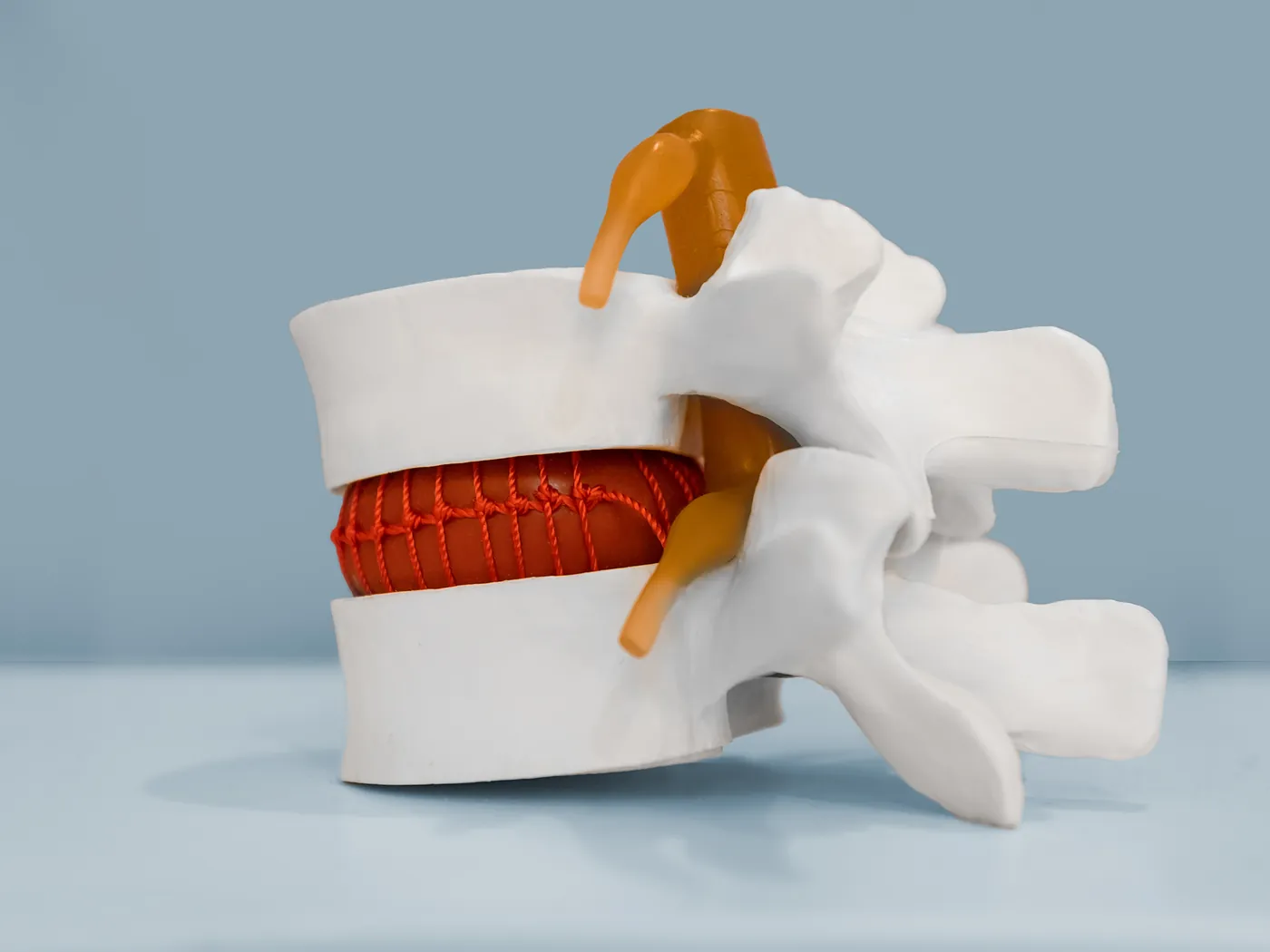
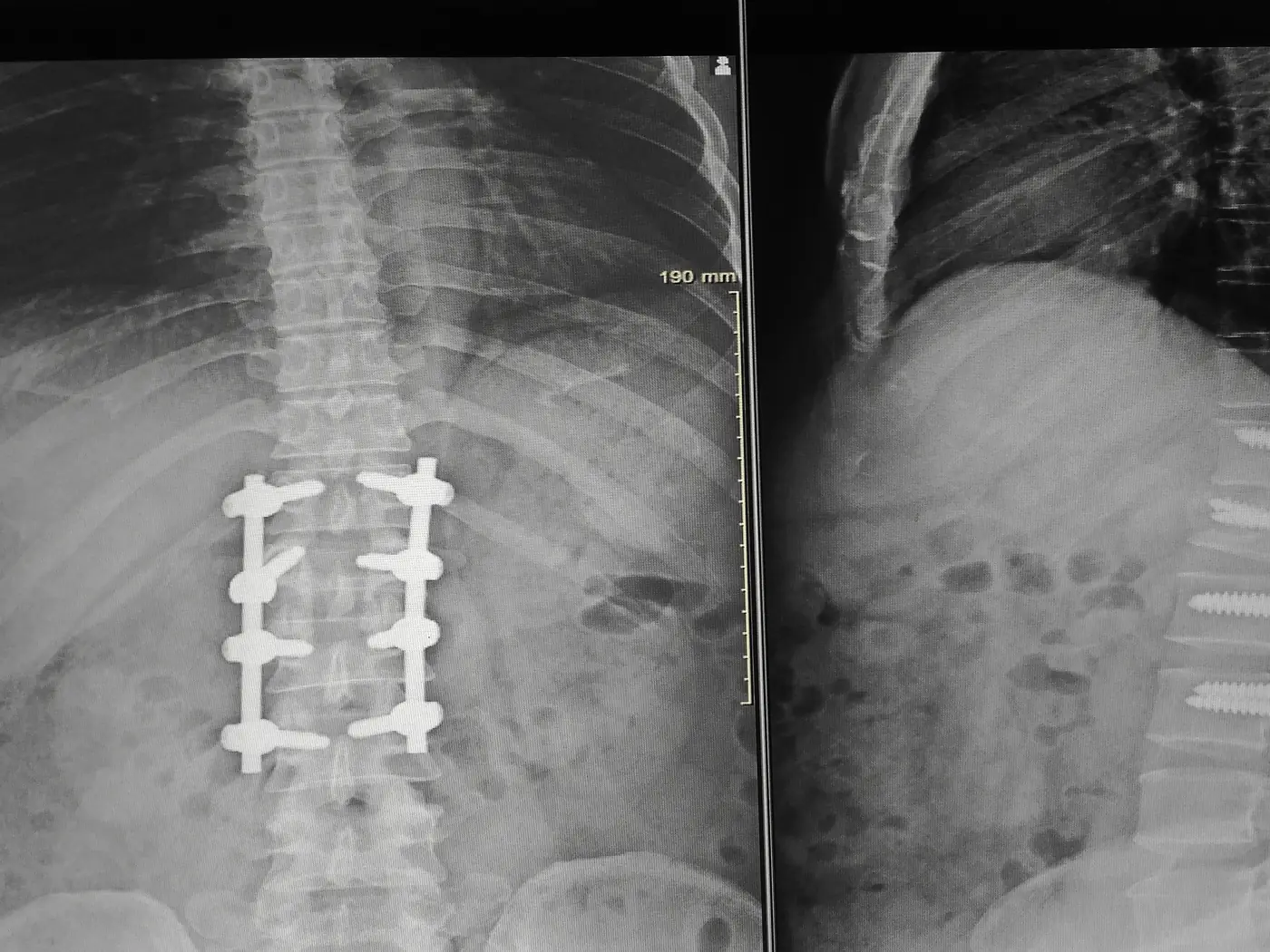
The spine is made of bones (vertebrae) cushioned by soft discs. When a disc bulges, herniates or wears out it can press on nerves and cause pain in the back, neck, arms or legs.
Lumbar disc surgery treats the lower back; cervical disc surgery treats the neck. Both aim to remove or repair the damaged part of the disc and free the nerve.
Conditions it covers
Lumbar disc herniation
Cervical disc herniation
Degenerated disc
Nerve root compression
02
Is this for you?
You may benefit from an assessment if you have:
Back or neck pain not settling with medicines or physiotherapy
Pain spreading into the arm or leg
Numbness, tingling or weakness
Difficulty standing, walking or doing daily tasks
03
How it is assessed
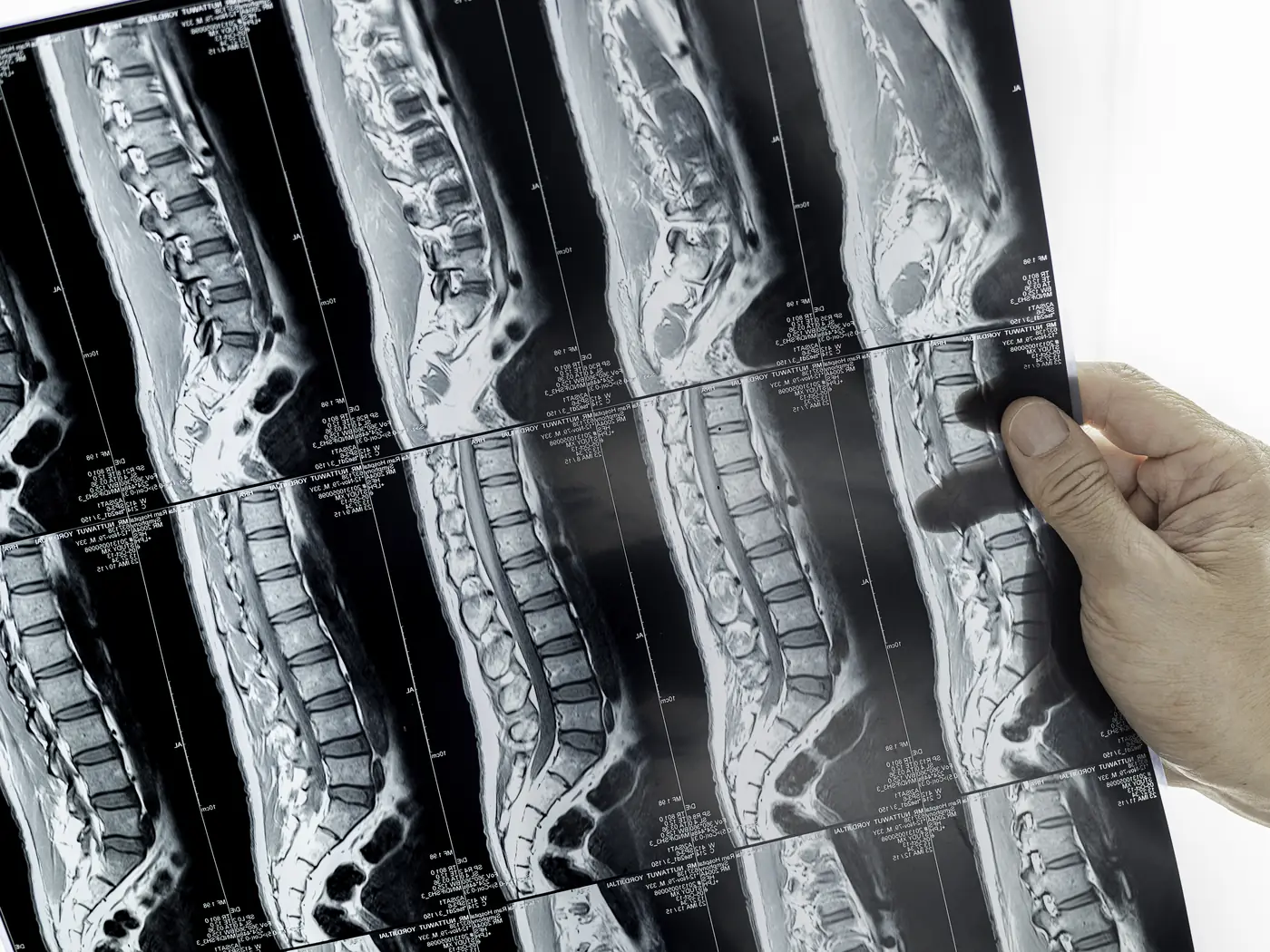
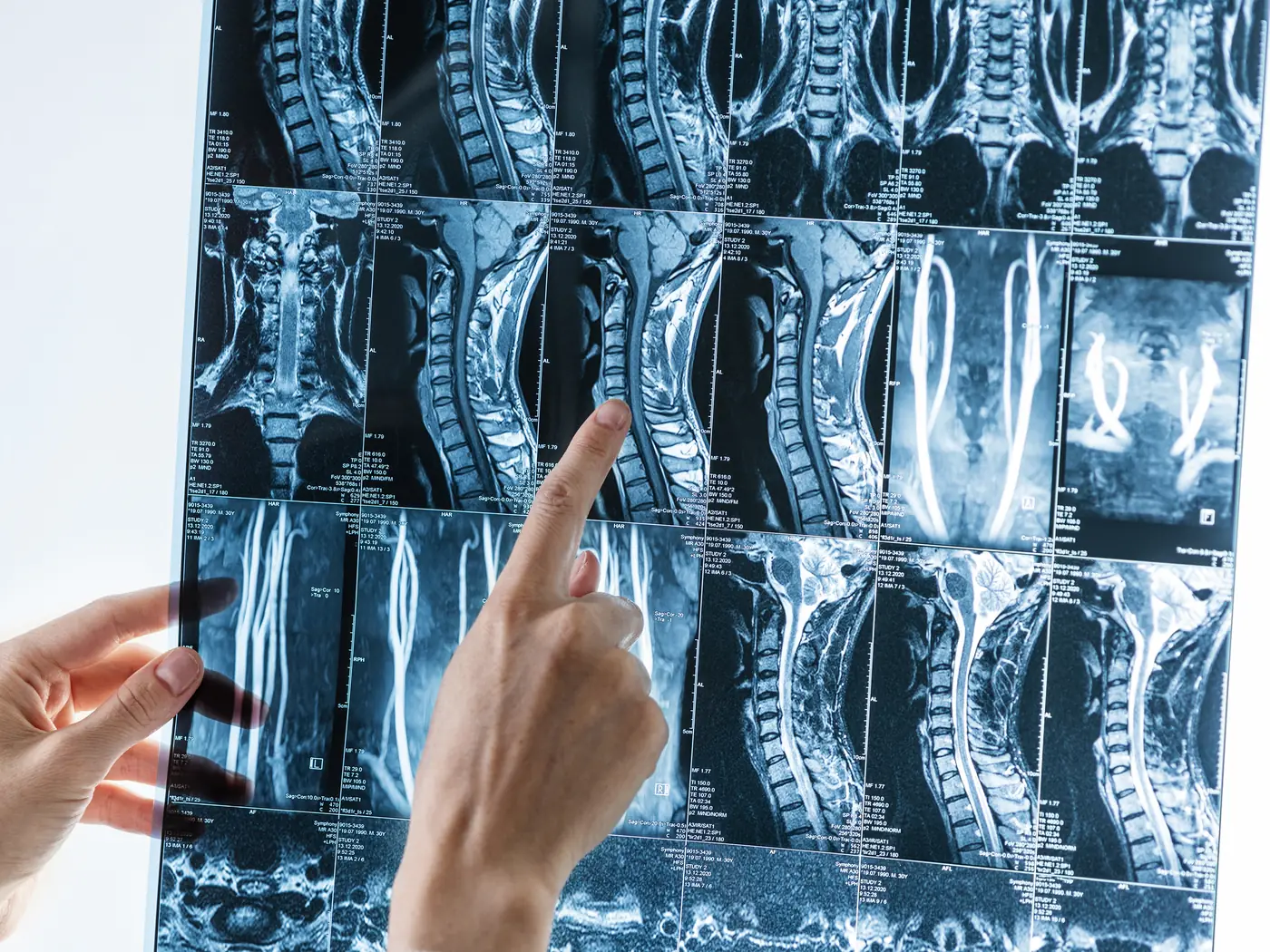
An examination of strength, sensation and reflexes, and an MRI to see exactly which disc and which nerve are involved. Most people try non-surgical treatment first.
Clinical and neurological examination
MRI of the lower back or neck
X-rays to check alignment and stability
04
Treatment options
Non-surgical options come first. Surgery is advised only when it is likely to help.
Non-surgicalMedicines, physiotherapy and injectionsMost disc problems are treated this way first.
SurgicalMicrodiscectomy / endoscopic discectomyRemoves the herniated part of the disc through a small opening.
SurgicalLaminectomy (decompression)Removes part of the bone over the spinal canal to relieve pressure.
SurgicalDisc replacementReplaces a damaged disc with an artificial one to keep movement, for suitable patients.
SurgicalSpinal fusionJoins two vertebrae to steady the spine when it is unstable.
05
Recovery
After treatment, the team builds a recovery plan around you.
1Walking soon after surgery
2Pain relief
3Physiotherapy
4Follow-up visits
06
Why Dr. Praveen
MBBS, M.S. Orthopaedics (NIMS) and four spine fellowships: FASSI (Mumbai), FMISSAB (Chennai), FAO (New Delhi), FAPSS (Malaysia).
12+ years in spine surgery; consults at CARE Hospitals, HITEC City and DIA Clinics, Kokapet.
Honest advice first: non-surgical care is tried whenever it can help, and surgery is advised only when it is likely to help.
Uses intraoperative neuromonitoring and navigation in spine surgery, where suitable, to protect the nerves and place implants accurately.
07
What patients say
Google reviews from patients who mention this kind of problem. See all reviews →
Yandapilli Durga PrasadJul 2026
★★★★★
I had a slipped disc issue that made even walking difficult. Dr. Praveen Goparaju treated me with great care and explained every step of the recovery process. His encouragement and treatment helped me regain confidence and return to work. Thank you, doctor, for changing my life.
Vamshi ManiJul 2026
★★★★★
I cannot put my appreciation 🙏 for Dr Praveen sir in words, he is very patient & attentive to my problem and gave me guidance to heal my disc issue, he went above and beyond in answering all my concerns and gave reassurance. Highly recommend him.
urooj fatimaJun 2026
★★★★★
Dr Praveen Gopparaju is an amazing surgeon. When I went to him for a consultation, he made sure I understood the issue and the solution. He performed my endoscopic spinal discectomy and I’m extremely satisfied with his treatments and follow up. For anyone who is looking for an orthopaedic consult, I would confidently direct them to Dr Praveen.
08
Questions
Will I need surgery for a slipped disc?
Usually not. Most slipped discs improve with time, medicines and physiotherapy. Surgery is advised when leg or arm pain continues for weeks, or when there is weakness or loss of bladder or bowel control.
What is the difference between lumbar and cervical disc surgery?
Lumbar surgery treats discs in the lower back, which usually cause leg pain (sciatica). Cervical surgery treats discs in the neck, which usually cause arm pain, numbness or weakness.
How long is recovery?
It depends on the procedure. After a microdiscectomy many people are walking the same or next day and return to light work within a few weeks. Dr. Praveen gives you a plan for your case.