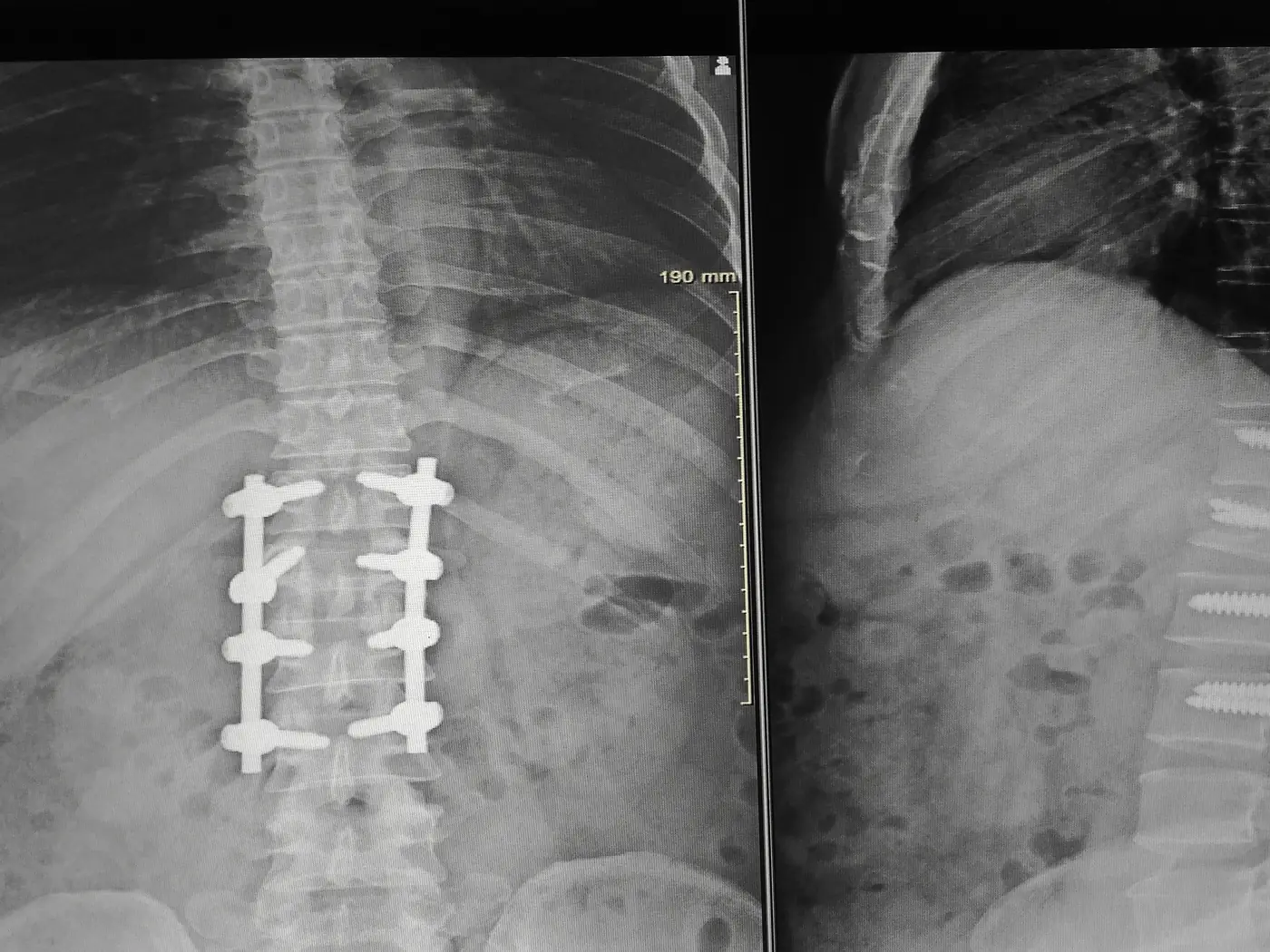
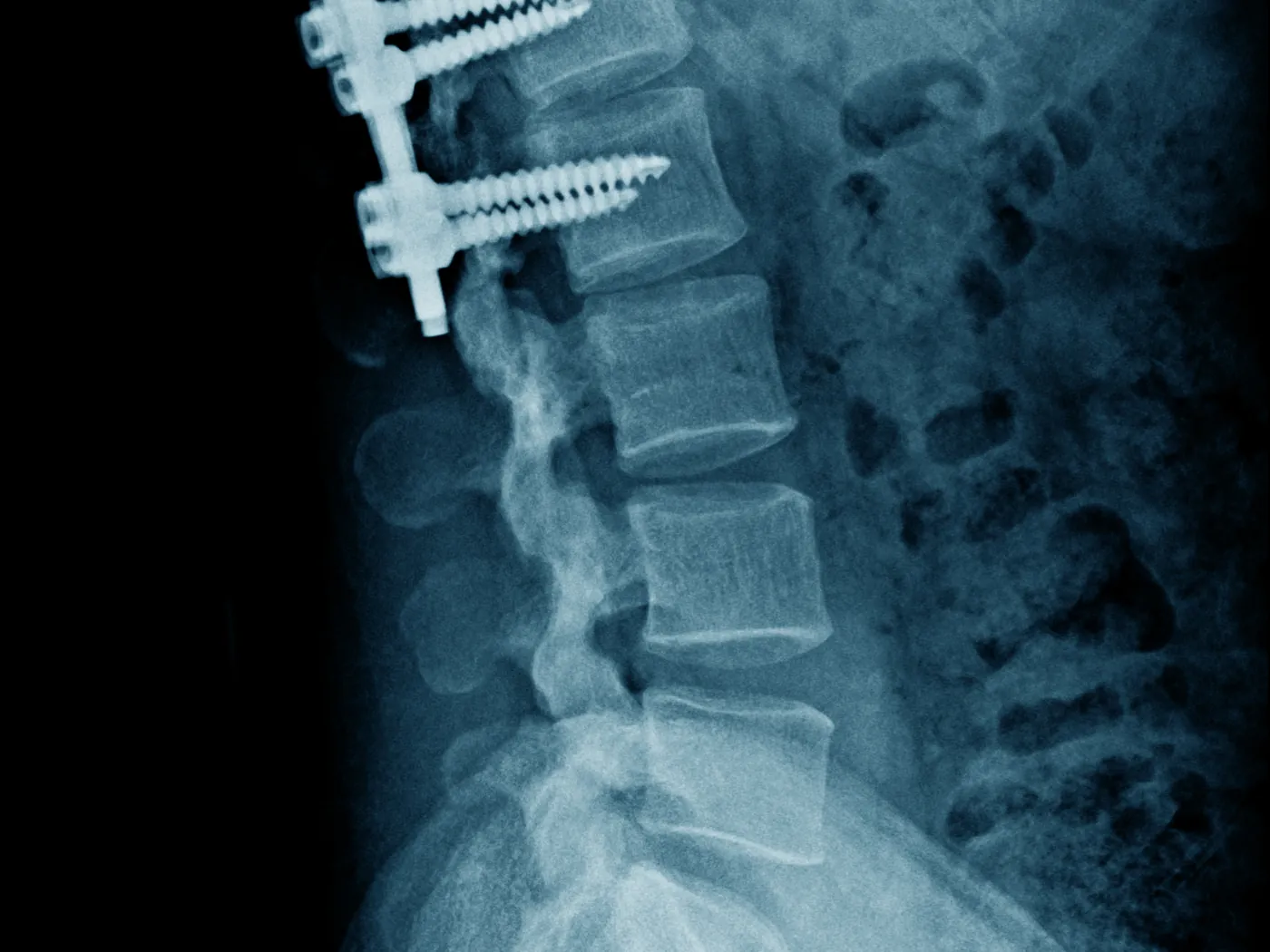
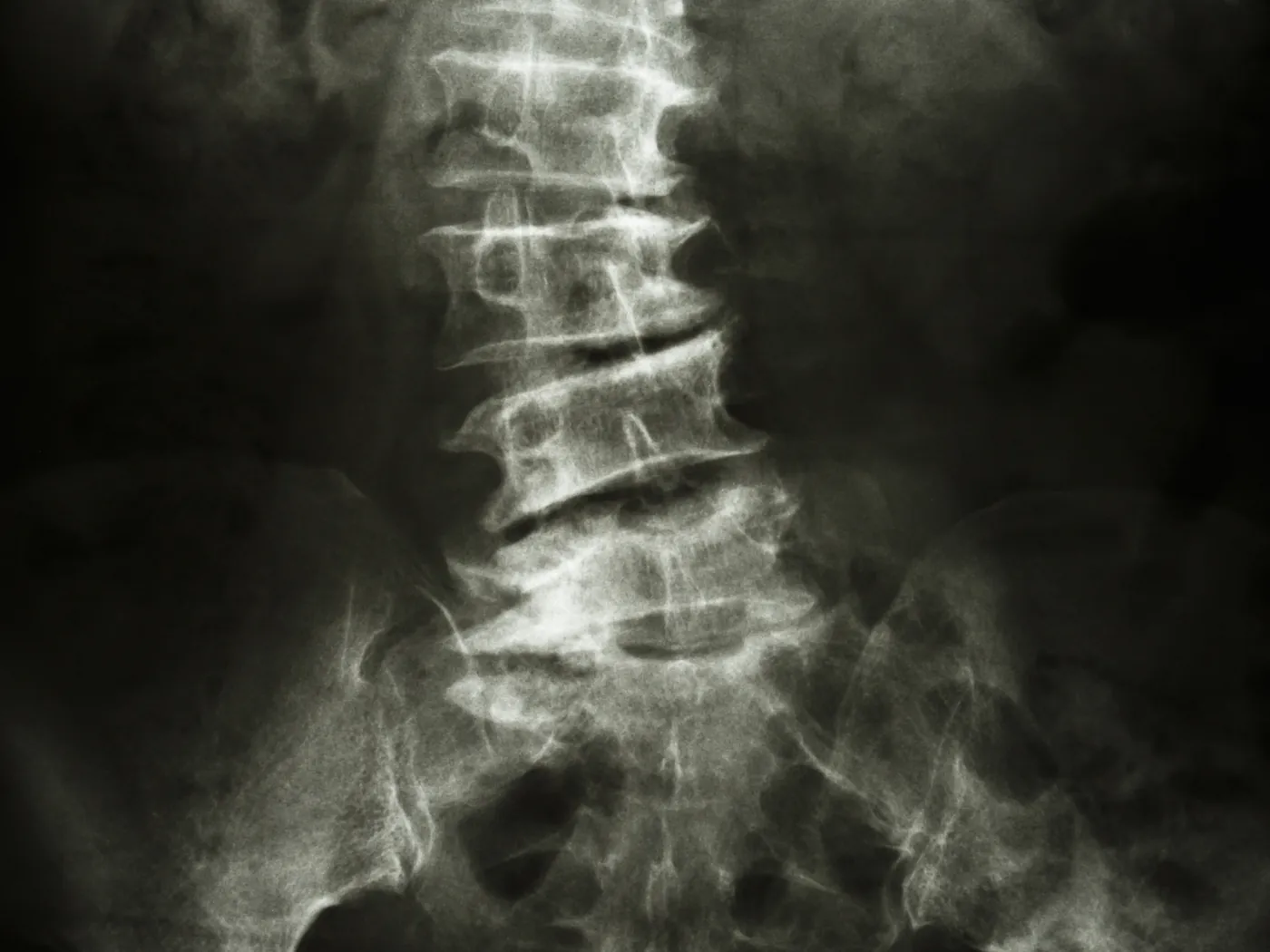
In spinal fusion, two or more vertebrae are joined so that they heal into a single solid bone. This stops abnormal movement between them and makes the spine stable.
It is usually advised when non-surgical treatment such as physiotherapy and pain management has not helped.
Conditions it covers
Degenerative disc disease
Spinal instability or spondylolisthesis
Spine fractures
Scoliosis or kyphosis
Severe arthritis of the spine
Problems after earlier spine surgery
02
Is this for you?
You may benefit from an assessment if you have:
Back pain made worse by standing or walking
Leg pain or heaviness when walking
A feeling that the back 'gives way'
Pain that has not settled with proper non-surgical care
03
How it is assessed
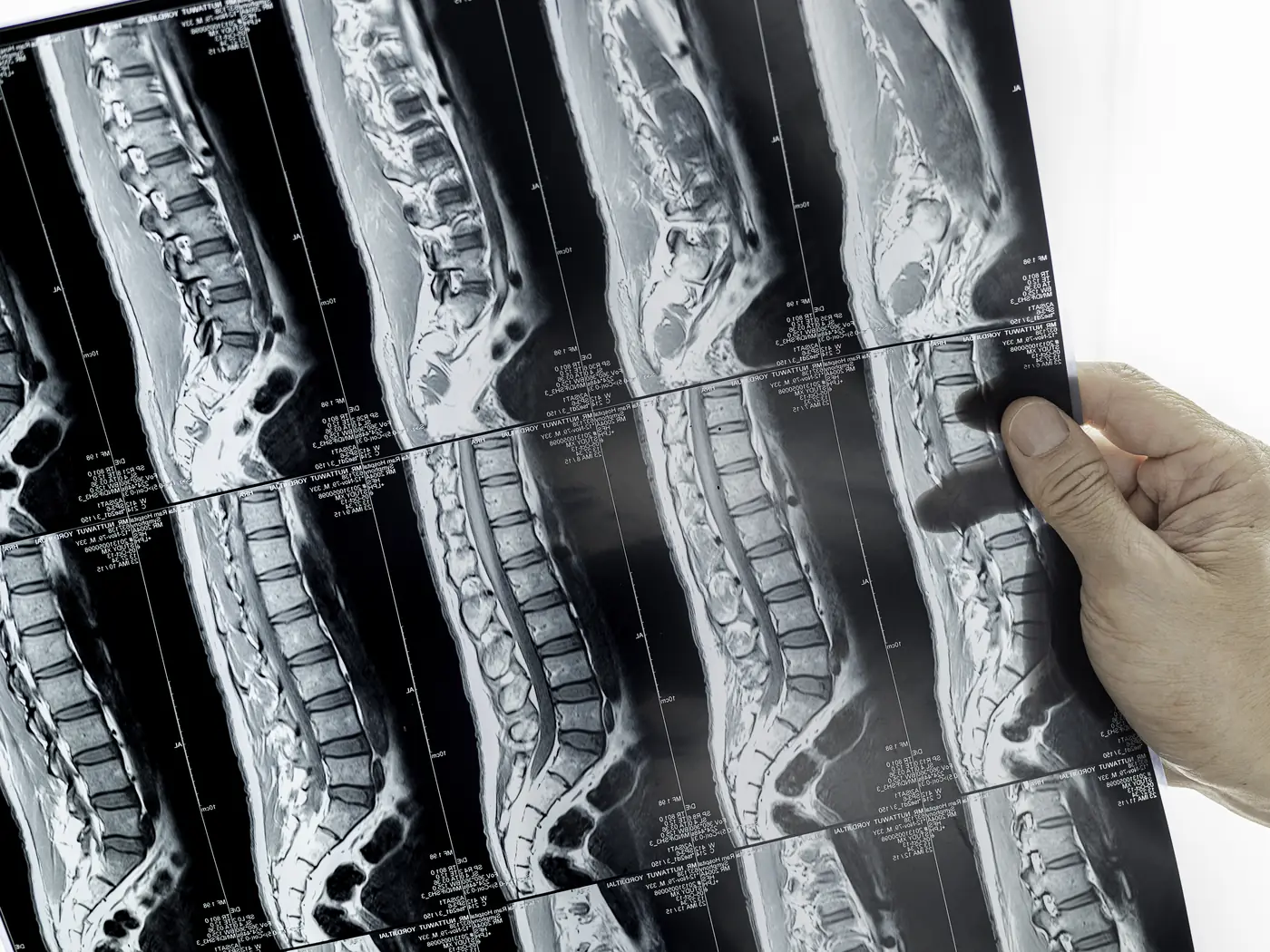
A detailed history, a neurological and physical examination, MRI, CT and X-rays (often standing or bending views), and a review of earlier treatments.
History and symptom review
MRI, CT and X-rays
Neurological and physical examination
Review of earlier treatment
04
Treatment options
Non-surgical options come first. Surgery is advised only when it is likely to help.
SurgicalPosterior lumbar fusion (PLF)Fusion from the back using screws and rods.
SurgicalTransforaminal lumbar interbody fusion (TLIF)A spacer is placed in the disc space from the back, plus screws and rods.
SurgicalAnterior lumbar interbody fusion (ALIF)The disc space is reached from the front of the abdomen.
SurgicalCervical fusionSteadies the neck, often together with removing a damaged disc.
SurgicalMinimally invasive fusionSmaller incisions for suitable patients.
05
Recovery
After treatment, the team builds a recovery plan around you.
1Early walking
2Physiotherapy plan
3Pain management
4X-rays to check the fusion
06
Why Dr. Praveen
MBBS, M.S. Orthopaedics (NIMS) and four spine fellowships: FASSI (Mumbai), FMISSAB (Chennai), FAO (New Delhi), FAPSS (Malaysia).
12+ years in spine surgery; consults at CARE Hospitals, HITEC City and DIA Clinics, Kokapet.
Honest advice first: non-surgical care is tried whenever it can help, and surgery is advised only when it is likely to help.
Uses intraoperative neuromonitoring and navigation in spine surgery, where suitable, to protect the nerves and place implants accurately.
07
What patients say
Google reviews from patients who mention this kind of problem. See all reviews →
K KrishnaApr 2026
★★★★★
I underwent L5-S1 TLIF surgery on 1st January 2025 by Dr. Praveen Goparaju. I came all the way from Mahaboob Nagar for treatment, and I am very happy with the care I received.
Dr. Praveen is highly skilled, supportive, and explains everything clearly. The surgery went smoothly, and my recovery has been very good. His entire team was also very caring and professional throughout my treatment.
I sincerely thank Dr. Praveen Goparaju for giving me relief from my problem. I highly recommend him to anyone facing spine issues.
Shobharani PendyalaOct 2026
★★★★★
My self Shobha Rani from Warangal, fom past 4 years I am suffering with Grade-2 L5 Lysthesis over S1 , Recently my self consulted Dr Praveen sir through my sister’s son who is physiotherapy practitioner, sir advised minimal key hole surgery.
On 27th August we undergone for surgery and discharged after 48 hours only, now I am walking and feeling pain free.
Thq Praveen sir and Care hospital Team for making me pain free.
570 Pichchiki JatinDec 2025
★★★★★
I had chronic back pain and a spine surgeon suggested immediate fusion surgery. That really scared me. Then I met Dr. Praveen Goparaju at Care Hospital. He listened carefully, explained the root cause, and suggested simple non-surgical options. Within a month I felt 80% better. He doesn’t rush patients into surgery and treats with complete honesty.
08
Questions
Will fusion stop my back from moving?
Only the fused segment stops moving. Most people do not notice a big change in overall movement, because the rest of the spine still moves.
How long does fusion take to heal?
The bone usually takes several months to fuse fully. Many people return to light activities within a few weeks; follow-up X-rays check the healing.
What is spondylolisthesis?
A condition in which one vertebra slips forward over the one below. It can cause back pain and leg pain, and fusion is one treatment when it does not settle.