
Every cricket season in Hyderabad, I meet teenagers and worried parents with a familiar pattern: low back pain that started during training, worsens with every spell of fast bowling or backbend, and does not settle with rest. In many of these young athletes, the cause turns out to be spondylolysis, a small stress crack in a bone at the back of the spine. I am Dr. Praveen Goparaju, a spine surgeon at CARE Hospitals, HITEC City, and in this article I explain what spondylolysis is, who gets it, how it is found and how most young people get back to their sport without an operation.
What is spondylolysis?
Your spine is a stack of bones called vertebrae. The front of each vertebra is a solid block that carries your weight. At the back is a ring of bone that protects the nerves, with small joints linking it to the vertebrae above and below.
On each side of that ring sits a narrow bridge of bone called the pars interarticularis, or simply the pars. Because it is thin and takes a lot of strain whenever the lower back arches, it is a natural weak spot.
Spondylolysis is a crack or break in the pars. In most people it is a stress fracture, the same kind of overuse crack runners get in the shin. It rarely comes from one big fall; it builds up from thousands of movements that arch and twist the lower back. The lowest lumbar vertebra, called L5, is the most common level, because it sits where the spine meets the pelvis.
The crack can be on one side (unilateral) or on both sides (bilateral), and this matters for healing.
Who gets spondylolysis?
Spondylolysis is one of the commonest causes of lasting low back pain in teenagers who play sport, because a growing pars has not yet reached full strength.
Sports and activities with a higher risk include:
- Fast bowling in cricket, especially with an action that arches and twists the back at delivery
- Gymnastics and yoga, with repeated backbends and walkovers
- Classical dance, such as Bharatanatyam and Kuchipudi, with deep backward bends
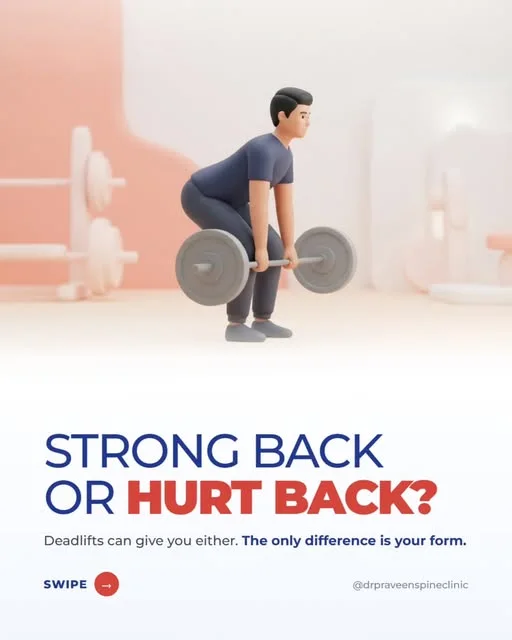
- Weightlifting and gym training, especially heavy lifts done with an over-arched back
- Volleyball, badminton, tennis and football, with repeated jumping, serving and smashing
- Wrestling, kabaddi and martial arts
- Butterfly and breaststroke swimming
Some people are born with a thinner pars, and it can run in families. In adults it is often found by chance on an X-ray; the crack usually happened years earlier and caused little trouble.
Symptoms of spondylolysis
Many people with spondylolysis have no symptoms at all. When it does cause pain, the usual pattern is:
- an ache in the lower back, often more on one side, that comes on gradually over a season of training,
- pain that is worse during and after sport, and eases with rest,
- pain that sharpens when you arch backwards, for example when bowling, serving, lifting overhead or doing a backbend,
- pain that may spread into the buttocks or the back of the thighs,
- tight hamstrings, so that touching the toes becomes harder than before,
- stiffness and, sometimes, muscle spasm in the lower back.
Spondylolysis on its own does not usually cause pain running below the knee, numbness or weakness. If those appear, it may mean that the vertebra has started to slip forward or that a nerve is being pressed, and that needs a prompt check.
How spondylolysis is diagnosed
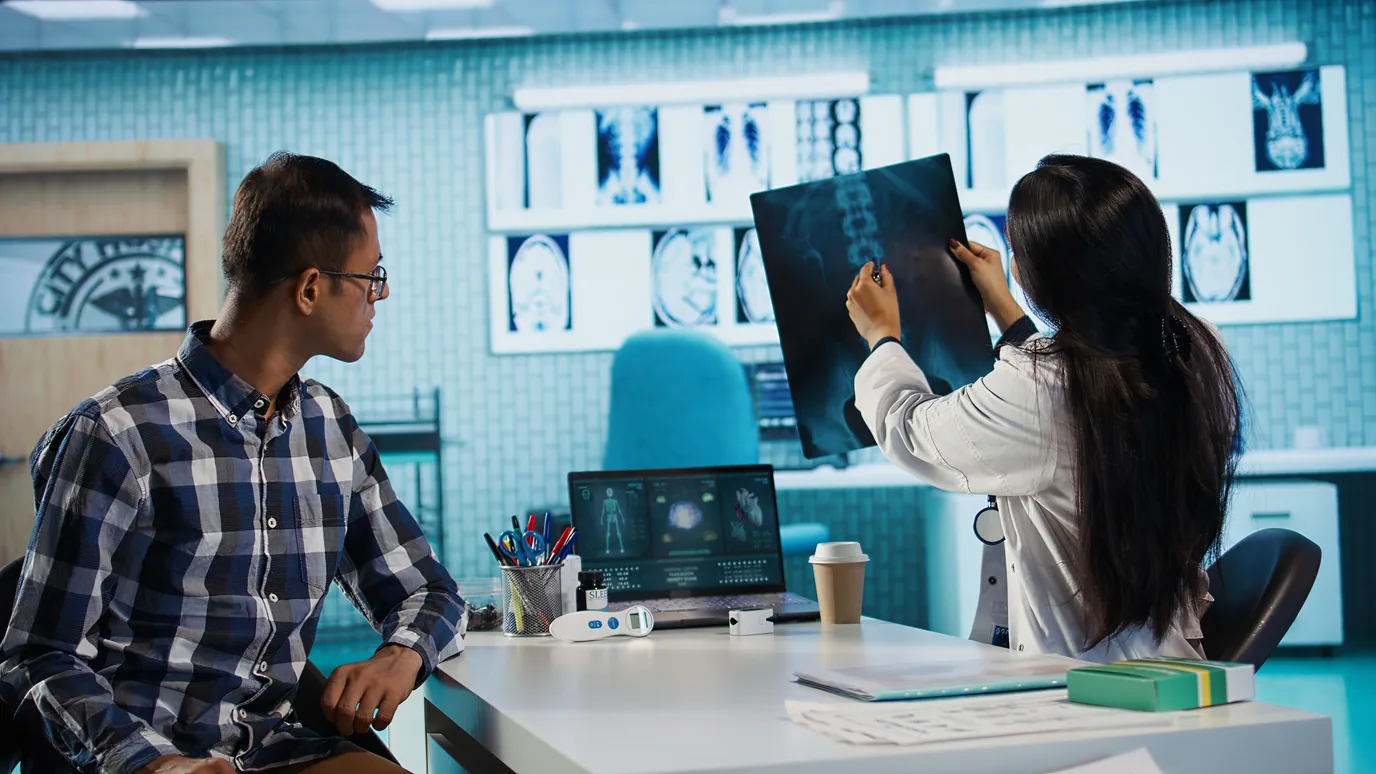
Diagnosis starts with a conversation and an examination: the sport, the training load and what makes the pain worse. A simple test is standing on one leg and gently leaning backwards; pain on that side makes a pars problem likely. I also check hamstring tightness and the nerves in the legs.
Imaging then confirms the diagnosis:
- X-rays of the lower back may show the crack or a slip, but early stress reactions often do not show up on an ordinary X-ray.
- MRI can pick up an early stress reaction, when the bone is swollen but not yet fully cracked, without any radiation. This makes it useful in children and teenagers, and it also shows the discs and nerves.
- CT scan gives the clearest picture of the bone and shows whether a crack is fresh or old, and whether it is on one side or both. It is used selectively because it involves radiation.
Not everyone needs every test; the scan chosen should be one that changes the plan.
Treatment for spondylolysis without surgery
Most young people with spondylolysis get better without an operation. The key is to give the bone time and protection to heal.
Rest from the sport. The most important step is to stop the activity that caused the crack, usually for several weeks to a few months. This is hard for a keen athlete, especially before a selection trial. Walking and daily activities are usually fine; the aim is to avoid repeated arching, twisting and impact.
A brace, in some cases. For some patients, a supportive lumbar brace worn for a period helps limit backward bending and eases pain. Not everyone needs one.
Physiotherapy. Once the pain settles, a physiotherapist works on hamstring and hip flexibility and core strength. Strong deep abdominal and back muscles share the load the pars was carrying.
Pain relief. Simple pain-relief medicines for a short time, as your doctor advises, plus ice or a warm pack, help while the bone heals.
Fixing the technique. Before returning, look at what caused the problem: a bowling action that over-arches the back, a sudden jump in training hours, or poor lifting form in the gym. Involve the coach.
Will the crack heal?
Many fresh cracks, especially early stress reactions and cracks on one side only, heal with bone over weeks to months. Cracks on both sides, and old cracks, are less likely to knit together. Even so, many become pain-free as the surrounding muscles grow stronger.
So the goal is not only a healed crack on a scan, but a pain-free back and a safe return to activity. Most young athletes go back to their sport within a few months, building up step by step.
How spondylolysis is linked to spondylolisthesis
When the pars is cracked on both sides, the vertebra loses part of its bony anchor at the back. In some people, especially during the growth spurt, it can slowly slip forward over the one below. This forward slip is called spondylolisthesis. When it follows a pars crack, doctors call it isthmic spondylolisthesis.
Most slips are mild. A few progress, narrow the space for the nerves and cause leg pain or numbness, so teenagers with cracks on both sides are often followed with occasional X-rays until they stop growing. You can read more on our page about spondylolisthesis treatment.
When is surgery needed for spondylolysis?
Surgery is needed only for a few people with spondylolysis, when:
- pain continues and limits daily life despite a long, well-supervised trial of non-surgical care, usually six months or more,
- there are nerve symptoms such as leg pain, numbness or weakness,
- the vertebra is slipping forward significantly or the slip is getting worse.
There are two broad types of operation:
- Direct repair of the pars. In young patients with healthy discs and no significant slip, the crack can be repaired with bone graft, held by screws, wires or hooks while it heals. This keeps movement at that level of the spine.
- Spinal fusion. When there is a slip, disc damage or nerve pressure, the affected vertebra is joined to the one below with screws, rods and bone graft so that they heal as one solid bone. The nerves can be freed at the same time, often through a minimally invasive approach where suitable. Our spinal fusion surgery guide explains this in detail.
Both need recovery time and physiotherapy, and the return to sport is gradual.
Preventing spondylolysis in young athletes
Not every case can be prevented, but these steps lower the risk:
- increase training load gradually, especially after a break,
- limit the overs a young fast bowler bowls each session and week, as coaching guidelines advise,
- ask a coach to check bowling, lifting and landing technique,
- build core strength and hamstring flexibility into training,
- allow rest days and do not play through back pain for weeks,
- get low back pain lasting more than two weeks in a young athlete checked.
Back pain in teenagers is often brushed aside as a "muscle catch", but pain that keeps returning with sport is different. For an overview of other reasons the lower back hurts, see our article on lower back pain causes.
When to see a spine surgeon
Please book a consultation if:
- a child or teenager has low back pain lasting more than two weeks, especially if they play sport or dance,
- the pain is worse when arching backwards or during training, and keeps returning,
- the pain spreads into the buttocks or thighs, or the hamstrings feel unusually tight,
- an X-ray has shown spondylolysis and you want to know what it means.
Go to an emergency department straight away if back pain comes with weakness in the legs, numbness in the private-part area, or changes in bladder or bowel control, or if it follows a serious fall or accident.
I see patients from all over Hyderabad, Telangana and Andhra Pradesh. You can meet me at CARE Hospitals, HITEC City or DIA Clinics, Kokapet, or book a consultation.
Frequently asked questions
What is spondylolysis? It is a stress crack in the pars, a small bridge of bone at the back of a vertebra, most often in the lowest bone of the lower back.
Can spondylolysis heal on its own? Many fresh and one-sided cracks heal with rest from sport and physiotherapy, and even cracks that do not knit often stop hurting.
Can my child return to cricket or gymnastics after spondylolysis? Most young athletes return to their sport within a few months, with a gradual build-up and attention to technique.
Is spondylolysis the same as a slip disc? No; spondylolysis is a crack in the bone, while a slip disc is the soft disc bulging out, though both can cause back pain.
Who should I see for spondylolysis in Hyderabad? A spine surgeon such as Dr. Praveen Goparaju at CARE Hospitals, HITEC City, or DIA Clinics, Kokapet, can examine you and plan treatment.