
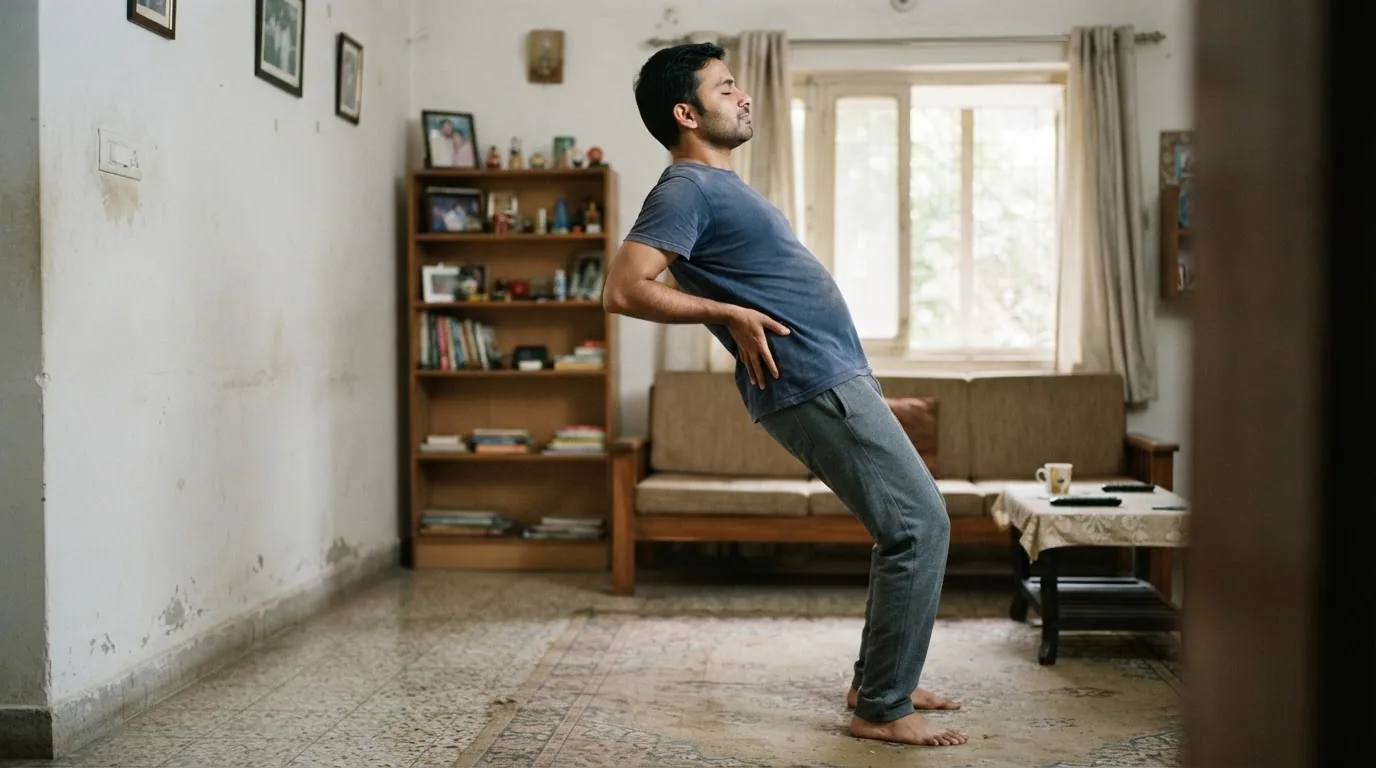
That loud "crack" during a back adjustment can feel very satisfying. Many people in Hyderabad and across Telangana and Andhra Pradesh visit traditional bone-setters, or crack their own backs and necks every day. As a spine surgeon, I am often asked: does it really fix the back, and is it safe? Here is a clear, simple answer.
What is the cracking sound?
Our spinal joints, like knuckles, are surrounded by a capsule filled with a lubricating fluid. When the joint is stretched or twisted quickly, the pressure inside drops and gas forms or collapses in that fluid. That makes the popping sound.
So the sound is usually just gas inside a joint. It does not mean that a bone was "out of place" and has now gone "back in".
Does a crack mean a bone was put back in place?
No. In a normal spine, bones do not slip in and out of place the way people often describe. The relief some people feel after a crack is usually because:
- tight muscles relax for a while,
- the joint moves more freely for a short time,
- the brain receives a burst of signals that can dampen pain briefly.
That is why the relief often fades, and people feel they need the crack again and again.
Can spinal manipulation help?

For some types of simple, mechanical back pain without nerve problems, manipulation or mobilisation done by a trained, qualified professional (such as a physiotherapist trained in manual therapy) may give short-term relief. It works well as one part of a plan that includes exercise, posture correction and staying active.
It does not cure a slipped disc, arthritis or a fracture.
When forceful manipulation can be dangerous
Forceful twisting or cracking can be harmful if the spine already has a problem. Be very careful if you have:
| Condition | Why it matters |
|---|---|
| A fracture, even an old or hidden one | Force can make it worse or injure nerves |
| Osteoporosis (thin bones) | Bones can break with surprisingly little force |
| Nerve compression, such as a slipped disc with leg or arm pain | Pressure on the nerve can increase |
| Certain neck conditions or neck injury | Forceful neck manipulation carries rare but serious risks |
| Spinal infection or tumour | Pain may be from disease that needs treatment, not adjustment |
| Instability, such as spondylolisthesis | Movement between bones can worsen |
Older adults and women after menopause are at higher risk because of weaker bones. Read about osteoporotic spine fractures.
Why a proper diagnosis comes first
Back pain has many causes. Before anyone pushes, twists or cracks your spine, it is important to know what is causing the pain. A spine specialist will:
- ask about your symptoms and warning signs,
- examine your back and nerves,
- advise X-rays or an MRI only when they are really needed.
Only then can you safely decide whether manipulation is suitable for you, or whether you need a different treatment such as physiotherapy, medicines, an injection, or in some cases surgery. See pain management services and disc surgery.
What about cracking your own back or neck?
Occasional stretching that produces a pop is usually harmless. But a strong urge to crack your back many times a day often points to stiffness or muscle imbalance that is better treated with regular movement and strengthening. Avoid sudden, forceful twisting of your own neck.
Choose qualified care
Always avoid unqualified practitioners who claim they can put your bones back into place, especially if they do not ask about your medical history or look at your scans. Your spine is too important to take risks with.
Safer ways to ease a stiff back
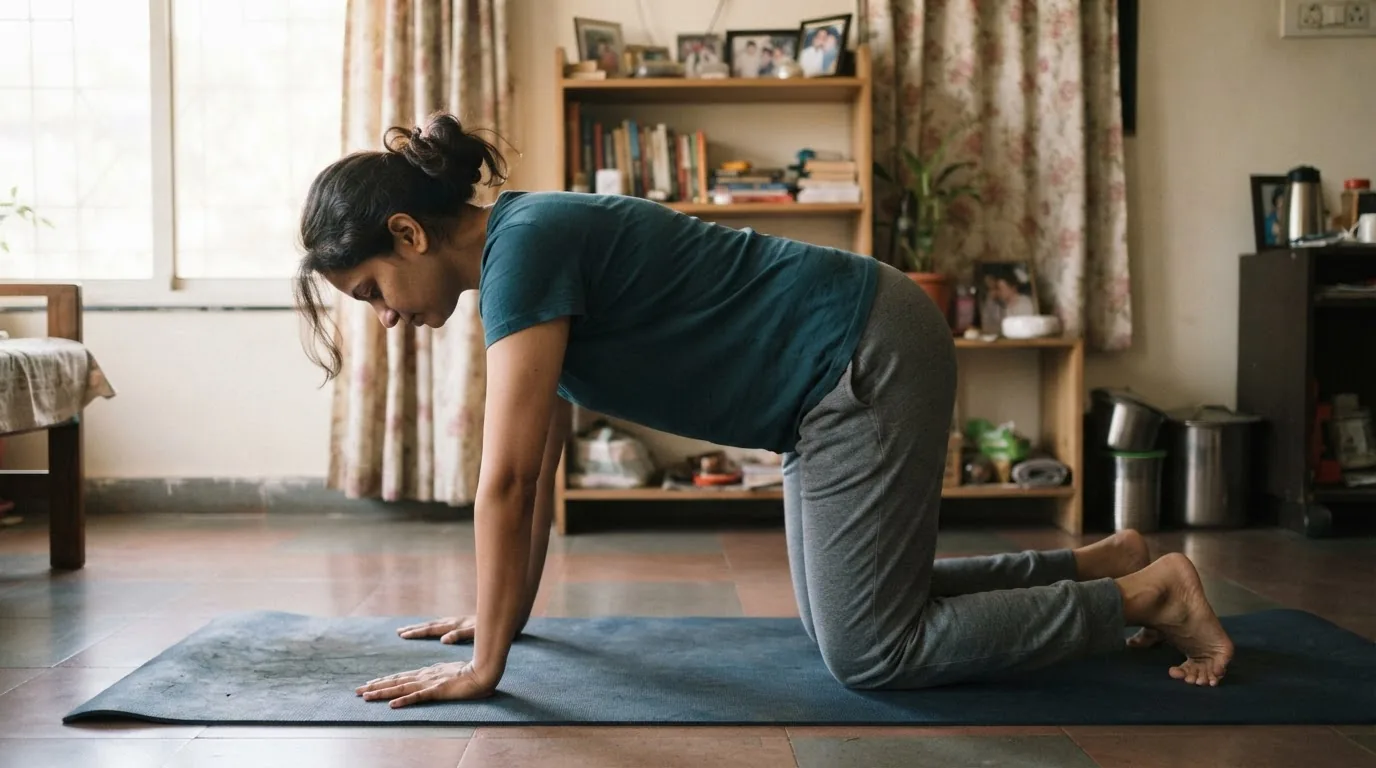
If you often feel the urge to crack your back, these daily habits usually help more over time:
- Move every 30-45 minutes if you sit for long hours. Stand, walk for two minutes and stretch gently.
- Gentle stretches such as knee-to-chest, cat-cow and child's pose, done slowly without bouncing.
- Core and hip strengthening two or three times a week, learned from a physiotherapist, so that muscles share the load with your spine.
- Regular walking, which keeps joints and discs healthy.
- A heat pack for 15-20 minutes to relax tight muscles.
- A healthy weight and good sleep, both of which reduce strain on the back.
If stiffness or pain continues despite these steps, it is better to find the cause than to keep cracking.
When to see a spine surgeon
See a spine specialist before any manipulation if you have:
- back or neck pain after a fall, accident or injury,
- known osteoporosis or a past fracture,
- pain going down the leg or arm, numbness or tingling,
- pain that has not improved in a few weeks.
Go to an emergency department straight away if you have weakness in the legs, numbness around the private parts, or loss of bladder or bowel control, or if new weakness, numbness or severe pain starts after a manipulation.
You can meet me at CARE Hospitals, HITEC City or DIA Clinics, Kokapet, or book a consultation.
Frequently asked questions
What causes the cracking sound in the back? It usually comes from gas bubbles forming or collapsing in the fluid inside a joint, not from bones moving back into place.
Is bone-setting safe for back pain? It can be risky, especially with fractures, osteoporosis, nerve compression or neck problems, so a proper diagnosis should come first.
Can spinal manipulation help back pain? For some simple back pain, manipulation by a trained professional may give short-term relief as part of an exercise-based plan.
Is cracking my own neck dangerous? Gentle stretching is usually fine, but sudden forceful neck twisting should be avoided.
Who should I see before going to a bone-setter? A qualified spine surgeon such as Dr. Praveen Goparaju in Hyderabad can check whether manipulation is safe for your spine.