
Hearing that you may need spine surgery is frightening for most people. Many imagine a long cut, weeks in bed and months away from work. For a slip disc that is pressing on a nerve, the reality is usually very different. I am Dr. Praveen Goparaju, a spine surgeon in Hyderabad, and in this article I explain microdiscectomy surgery in plain words: who needs it, how it is done through a small cut using a microscope, the keyhole endoscopic alternative, what recovery looks like week by week, the risks, and how to lower the chance of the disc slipping again.
What is microdiscectomy surgery?
Each disc in the spine has a tough outer ring and a soft centre. When the ring tears, part of the centre can push out (herniate) and press on a nerve root. In the lower back this causes sciatica, pain running down the leg, often with numbness, tingling or weakness.
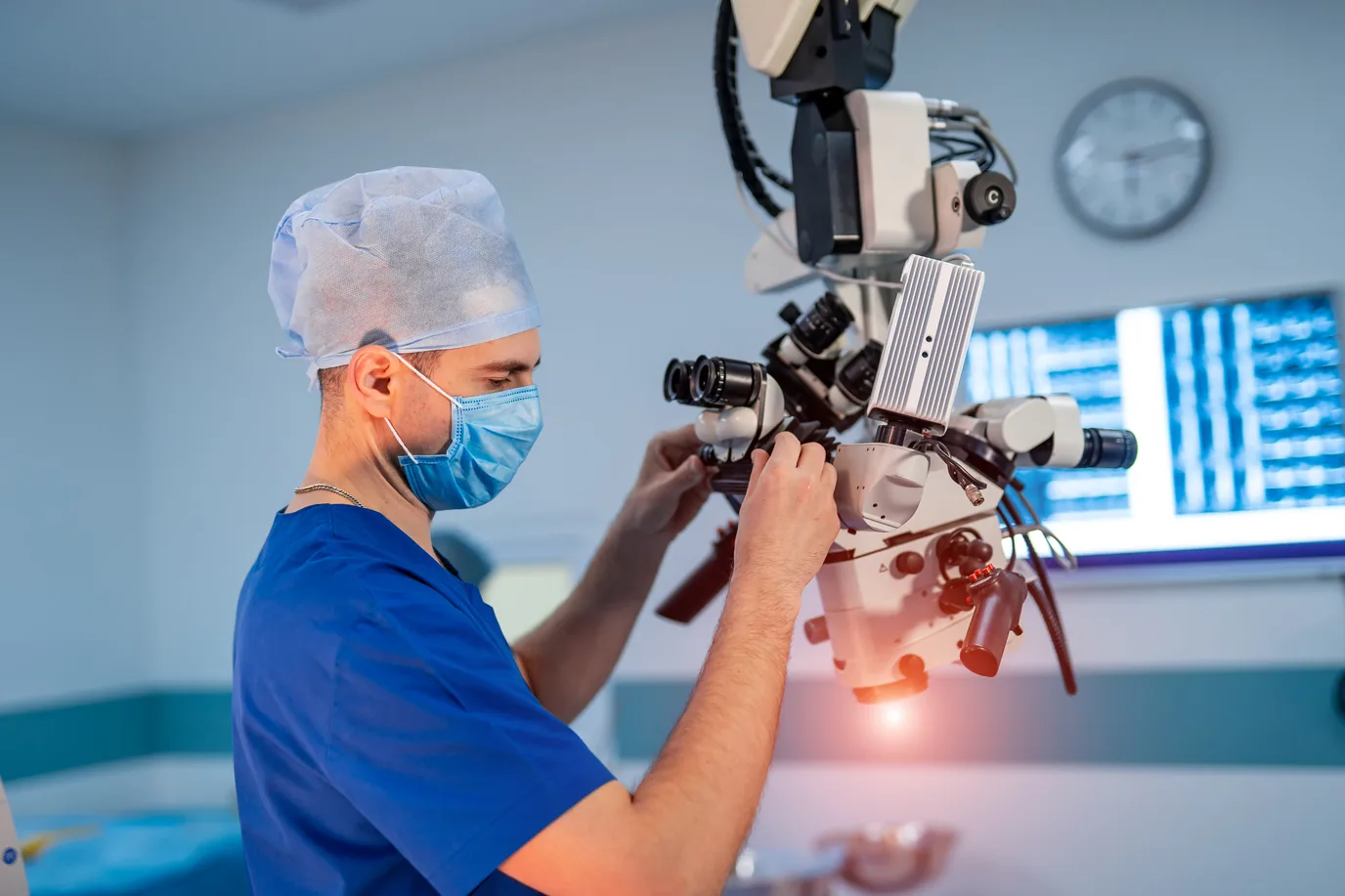
A microdiscectomy removes only the piece of disc that has pushed out and is pressing on the nerve. The rest of the healthy disc is left in place to keep working as a cushion. The word "micro" refers to the operating microscope, which magnifies and lights up the small working area so the surgeon can see the nerve and the disc fragment clearly through a small cut.
It is not a fusion. No screws or rods are used, and the spine keeps its normal movement.
Who needs microdiscectomy?
Most slip discs get better without surgery, with activity, short courses of medicine, physiotherapy and sometimes a nerve root injection. Microdiscectomy is usually advised when:
- leg pain stays severe despite several weeks of proper non-surgical treatment,
- there is weakness in the leg or foot that is not improving or is getting worse,
- the pain keeps returning and is affecting work, sleep and daily life,
- the MRI shows a disc fragment pressing on the nerve that matches your symptoms and examination,
- in an emergency, when a large disc presses on the nerves that control the bladder and bowels.
The key point is that the scan and the symptoms must agree. A disc bulge on an MRI with only back pain and no leg symptoms is rarely a reason for this operation.
Microdiscectomy may not be the right operation when the main problem is narrowing of the canal from bone and thick ligaments, when a vertebra has slipped and is unstable, or when the disc has herniated several times at the same level. In those cases a decompression or a fusion may be discussed instead. Our disc surgeries page describes these other options.
Before the operation
Before surgery you will usually have:
- a review of your MRI, and X-rays to check alignment,
- blood tests, an ECG and a check-up by the anaesthesia team,
- advice on which of your regular medicines to continue or pause, especially blood thinners and diabetes medicines,
- instructions on fasting before surgery.
This is the time to ask questions, so write them down and bring a family member if you can.
How microdiscectomy surgery is done
Here is what happens in a typical lower-back microdiscectomy:
- Anaesthesia. The operation is usually done under general anaesthesia, so you are asleep throughout.
- Positioning. You lie face down on a padded frame that keeps pressure off your tummy.
- Marking the level. A quick X-ray confirms the exact disc level before any cut is made.
- A small cut. A short cut is made in the lower back, just to one side of the midline, usually a few centimetres long.
- Moving muscle aside. The back muscles are gently moved aside rather than cut across.
- Opening a small window. A thin ligament and sometimes a tiny sliver of bone are removed to reach the nerve.
- Freeing the nerve. Under the microscope, the nerve is gently moved aside and the disc fragment pressing on it is removed.
- Closing. The area is checked, washed and closed with stitches or skin glue.
Nerve monitoring is used where suitable to protect the nerves. The operation commonly takes around an hour, though this varies.
Endoscopic discectomy: the keyhole alternative
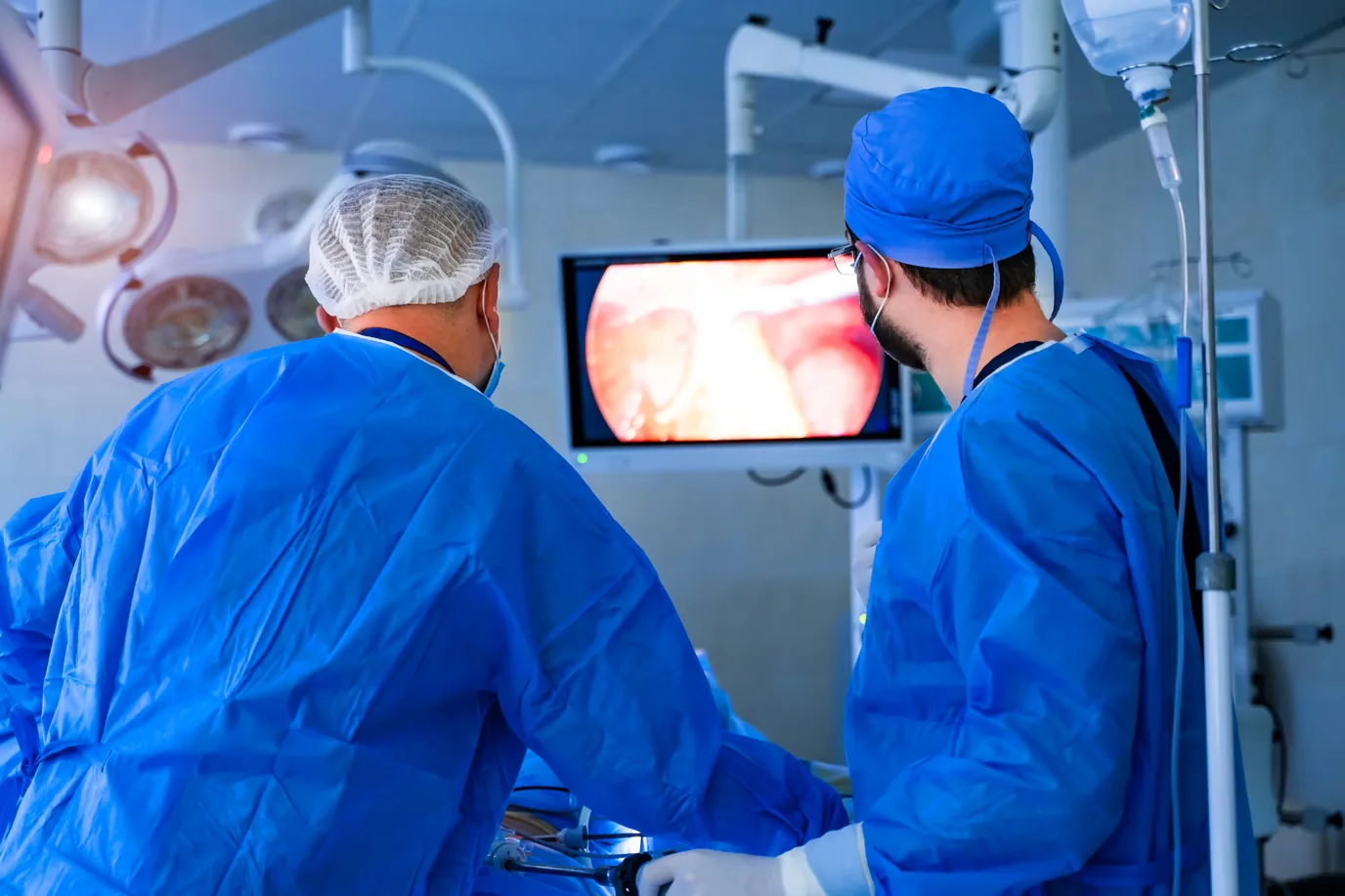
For some disc herniations, the same fragment can be removed with endoscopic discectomy. Instead of a microscope, a thin tube carrying a camera is passed through an even smaller cut, often about a centimetre. The surgeon watches a screen and removes the fragment with fine instruments passed through the tube.
| Feature | Microdiscectomy | Endoscopic discectomy |
|---|---|---|
| How the surgeon sees | Operating microscope | Camera on a thin tube (endoscope) |
| Size of cut | A few centimetres | Often around a centimetre |
| Muscle handling | Muscles moved aside | Muscles moved aside, less disturbance |
| Suits | A wide range of disc herniations | Many, but not all, disc positions |
| Walking after surgery | Same day or next day | Usually within hours |
Both are minimally invasive, and both aim to do the same thing: free the nerve. Which one suits you depends mainly on the size and position of the disc fragment on your MRI. Our article on keyhole vs open spine surgery explains these approaches further.
Recovery after microdiscectomy, stage by stage
Every person heals at their own pace, but recovery usually follows a pattern.
The first day. You will be helped to stand and walk, usually on the same day or the next morning. Many people notice that the sharp leg pain eases quickly, while the wound feels sore. Numbness and tingling often take longer to fade than pain.
The first two weeks. Most people go home within a day or two. Walk several times a day and slowly increase the distance. Avoid bending, lifting and twisting. Sit for short periods only and get up often. Keep the wound clean and dry as advised.
Two to six weeks. Many people with desk jobs return to work in this period, often starting with shorter days or work from home. A physiotherapist will start gentle core and back exercises. Driving a car is usually allowed once you can sit comfortably and brake suddenly without pain. Riding a two-wheeler, especially on rough roads, should wait until your surgeon clears you.
Six weeks to three months. Exercise is stepped up, and most people return to normal daily activities. Heavy lifting, gym weights and sports are brought back gradually, with your surgeon's and physiotherapist's guidance.
Risks, in plain words
Microdiscectomy is a common, well-understood operation, but like any surgery it has risks. The main ones are:
- Infection of the wound, which is uncommon and is usually treated with antibiotics.
- A small tear in the covering of the nerves, which can leak spinal fluid. It is usually repaired during the operation and heals with rest.
- Bleeding, which is usually small in this operation.
- Nerve injury, which is rare, but can cause new numbness or weakness.
- Symptoms that do not fully go away, especially numbness, when the nerve was pressed for a long time before surgery.
- The disc slipping again at the same level, which happens in a small number of people.
- General risks of anaesthesia, such as reactions to medicines or, rarely, blood clots.
Your surgeon will explain how these apply to you.
Can the disc slip again? Recurrence and prevention
After microdiscectomy, the remaining disc is still a disc, and its outer ring has a small weak spot where the fragment came out. In a small number of people, another piece pushes out later, most often in the first months.
You can lower this risk by:
- avoiding heavy lifting and repeated bending for the first six weeks,
- lifting with your knees bent and the load close to your body, always,
- building core strength with the exercises your physiotherapist teaches you, and keeping them up long term,
- taking breaks from long sitting at work and on long drives,
- keeping a healthy weight,
- stopping smoking, which weakens the discs and slows healing.
If the disc does slip again, it can often be treated without surgery at first. When surgery is needed again, a repeat discectomy or, in some cases, a fusion may be discussed.
When to see a spine surgeon
Please book a consultation if:
- leg pain from a slip disc has not improved after four to six weeks of treatment,
- you notice weakness in a leg or foot,
- you have been advised microdiscectomy and want to understand your options,
- after surgery, leg pain returns, or the wound becomes red, swollen or starts to leak.
Go to an emergency department straight away if you have numbness around the private parts or buttocks, new difficulty passing urine, loss of bladder or bowel control, or weakness in both legs, whether before or after surgery.
Read more about leg pain from discs on our sciatica treatment page. I see patients from all over Hyderabad, Telangana and Andhra Pradesh. You can meet me at CARE Hospitals, HITEC City or DIA Clinics, Kokapet, or book a consultation.
Frequently asked questions
Is microdiscectomy surgery painful? You are asleep during microdiscectomy surgery, and afterwards the wound is sore for some days, while the leg pain often eases quickly.
How long is the hospital stay after microdiscectomy? Most people walk the same or next day and go home within a day or two.
When can I return to work after microdiscectomy? Many people with desk jobs return within two to six weeks, while heavy manual work takes longer.
Is microdiscectomy the same as keyhole surgery? Both are minimally invasive; microdiscectomy uses a microscope through a small cut, while endoscopic keyhole surgery uses a camera through an even smaller one.
Can the disc slip again after microdiscectomy? It can in a small number of people, and Dr. Praveen Goparaju, a spine surgeon, advises careful lifting, core exercises and no smoking to lower the risk.