

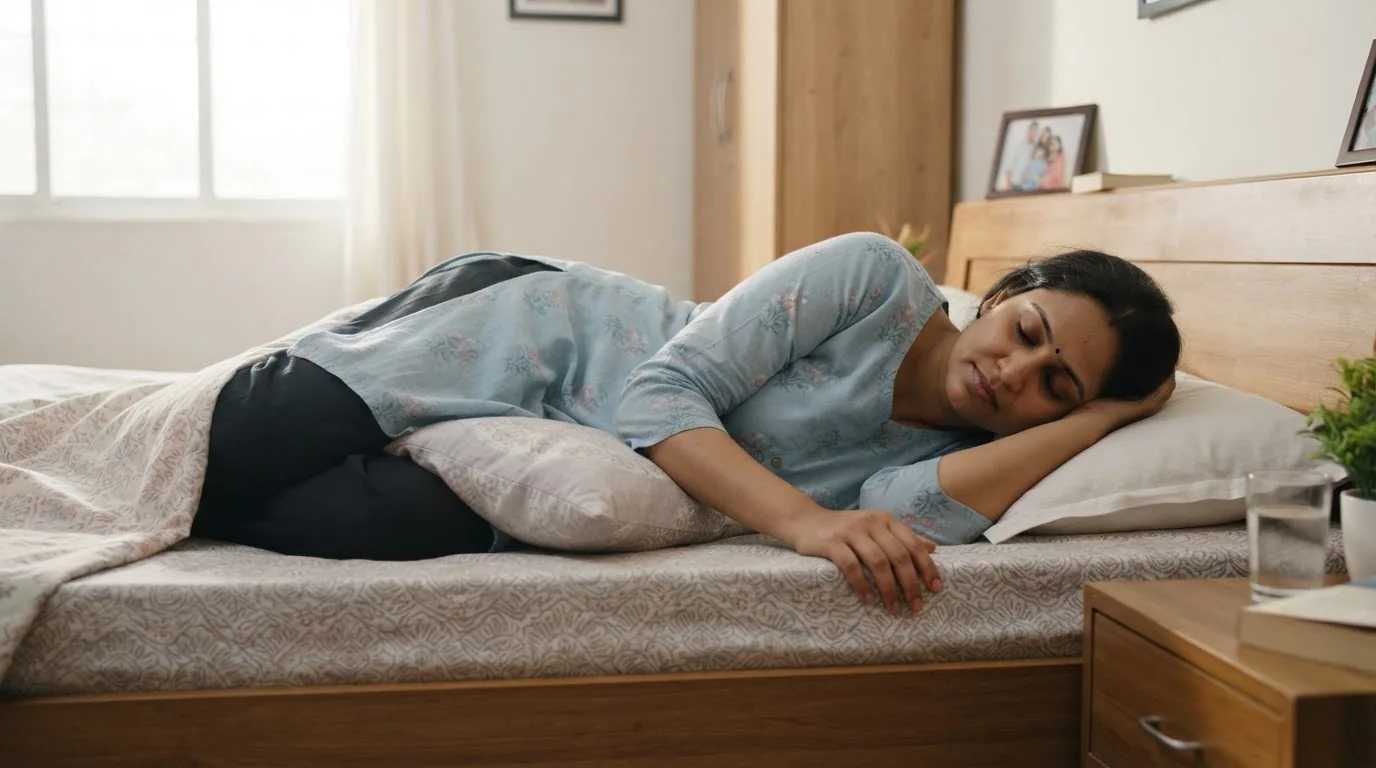
"Doctor, should I start sleeping on the floor?" This is one of the most common questions my patients in Hyderabad ask. Many families believe a hard surface is good for the back. Others buy the softest mattress they can find. In my experience as a spine surgeon, both extremes can cause trouble. Here is what actually matters.
Is sleeping on the floor necessary for a healthy back?

No. Sleeping on the floor is not necessary for a healthy spine. Some people are comfortable on a thin mat, and that is fine for them. But for many, especially older adults or people with hip, shoulder or knee problems, a very hard surface creates pressure points, disturbs sleep and makes it painful to get up.
Good sleep is itself important for back pain recovery. A surface that keeps you awake does not help your spine.
Too hard or too soft: why both can hurt
A surface that is too hard does not mould to the natural curves of your body. Your shoulders and hips take all the pressure, while the lower back may hang unsupported.
A mattress that is too soft lets the heaviest part of your body, usually the hips, sink in. The spine then sags like a hammock, which can strain the lower back through the night.
For most people with back pain, a medium-firm mattress is usually a good choice. It supports the natural shape of the spine while still cushioning the shoulders and hips. Research on people with ongoing lower back pain has also found that medium-firm surfaces tend to work better than very firm ones.
How to test a mattress
- Lie on it for several minutes in your usual sleeping position, not just a quick sit.
- On your back, slide your hand under your lower back. It should fit with a little resistance, without a big gap.
- On your side, your spine should look roughly straight from neck to hips, not sagging or tilted.
- You should be able to turn over easily, without sinking in.
- If you share the bed, check that your partner's movement does not throw you around.
Body weight matters too. Heavier people often need a slightly firmer, more supportive mattress; lighter people may be more comfortable with a little more cushioning.
When to replace your mattress
Consider replacing it if:
- you can see a dip or sag where you sleep,
- you wake with stiffness that eases within an hour of getting up,
- you sleep better on a different bed, such as when travelling,
- it is more than 7-10 years old.
You do not always need a new mattress at once. A firm, good-quality topper on a sagging mattress, or a supportive board under it, can help in the short term.
Sleeping positions for back pain

| Position | How to make it spine-friendly |
|---|---|
| On your back | Place a pillow under your knees to relax the lower back |
| On your side | Bend your knees slightly and keep a pillow between them |
| On your stomach | Usually the hardest on the neck and back; if you must, place a thin pillow under the hips |
Use a pillow that keeps your neck in line with your spine. Read more in our article on neck and shoulder pain and the right pillow.
Other bed-time myths
"A back belt at night will protect my spine." A back belt is not meant for everyday use or for sleeping, unless your doctor advises it for a specific reason. Long-term use can weaken the muscles that support your spine.
"If my back hurts, I should stay in bed." Long bed rest makes back muscles stiff and weak and slows recovery. Gentle movement, as your pain allows, is usually better. See our guide to avoiding back pain.
When a mattress is not the problem
If changing your mattress and posture does not help, the cause of your back pain may lie elsewhere. Morning stiffness that lasts a long time, pain that spreads down a leg, or pain that wakes you at night should be checked. Read why your back may feel stiff every morning.
Pillows, posture and the hour before bed
The mattress is only one part of a good night for your spine.
- Pillow height: on your back, a slightly lower pillow; on your side, one that fills the gap between your ear and the mattress so that your neck stays straight.
- Getting in and out of bed: roll onto your side, bend your knees, and push up with your arms instead of sitting straight up. This "log roll" protects a sore back.
- Screens in bed: lying propped on your elbows to watch a phone or laptop strains both the neck and the lower back. Put the screen away before you settle down.
- Gentle stretching: two or three easy stretches before bed, such as knee-to-chest, can relax a stiff back.
- Regular sleep timings help your body recover and can lower how strongly you feel pain.
When to see a spine surgeon
Please book a check-up if you have:
- back pain lasting more than a few weeks despite good habits,
- pain spreading down the leg with numbness or tingling,
- back pain that wakes you up at night.
Seek urgent care for leg weakness, numbness around the private parts, or changes in bladder or bowel control.
You can meet me at CARE Hospitals, HITEC City or DIA Clinics, Kokapet, or book a consultation.
Frequently asked questions
Is sleeping on the floor good for back pain? It is not necessary; for many people a very hard surface causes pressure points and poor sleep.
What type of mattress is good for back pain? For most people with back pain, a medium-firm mattress that supports the spine's natural curves is usually a good choice.
Can a soft mattress cause back pain? A mattress that is too soft can let the hips sink, so the spine sags through the night and strains the lower back.
Should I wear a back belt while sleeping? No, unless your doctor advises it for a specific reason; long-term use can weaken the supporting muscles.
Who can help if my back pain continues? A spine surgeon such as Dr. Praveen Goparaju in Hyderabad can find the cause and suggest the right treatment.