




Introduction: More Than Just a Cramp
Imagine this: You feel a mild, unusual tingling sensation that starts deep in your buttock and travels down the back of your leg. You might initially dismiss it as a strange cramp, a muscle pull, or just “sleeping wrong.” But day after day, that tingling turns into a burning, shooting pain that makes standing up or even sitting down a deliberate, painful effort.
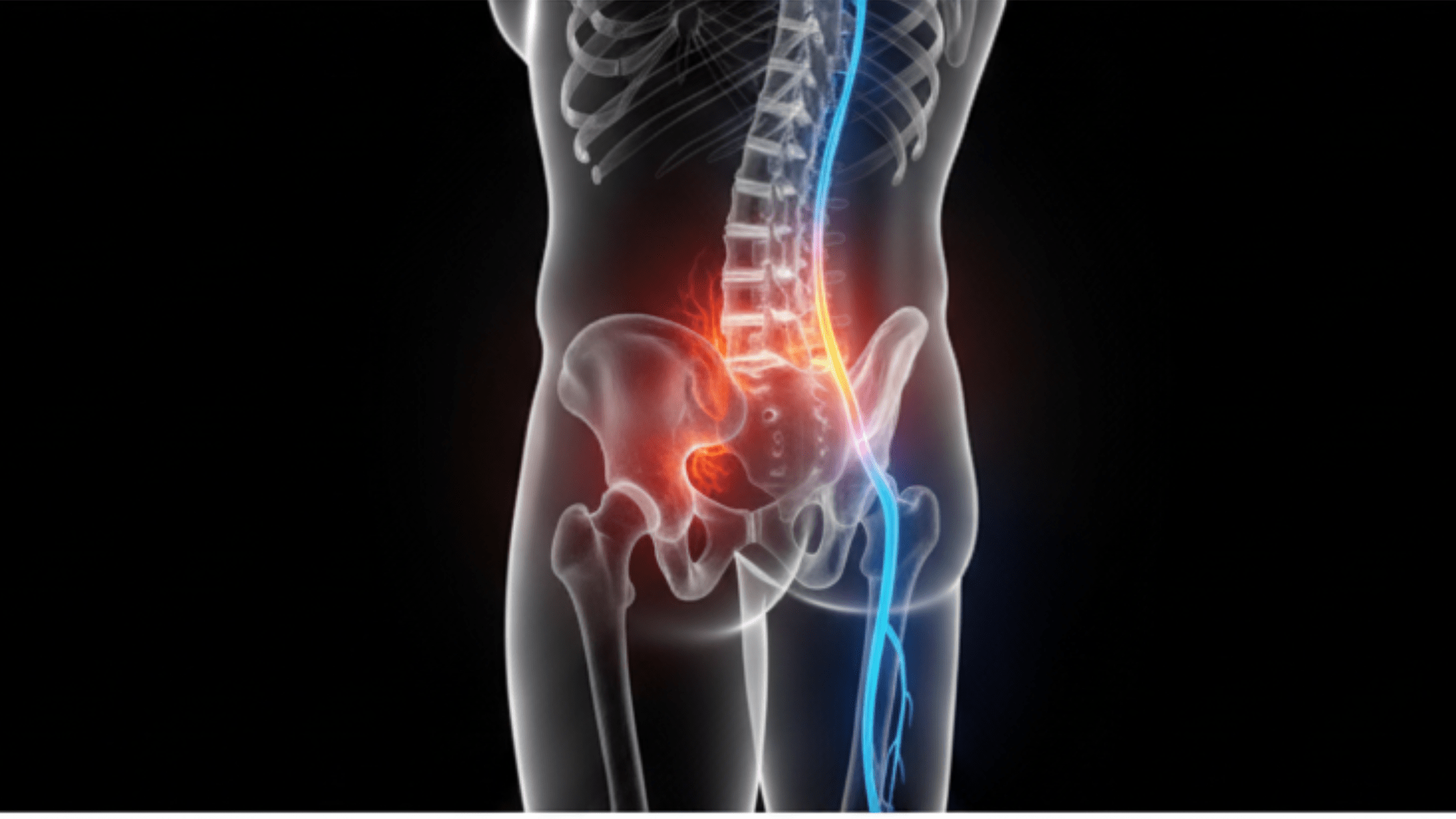
This isn’t just a tough muscle knot; it is very likely the early sign of sciatica pain symptoms. Sciatica is not a diagnosis in itself; it’s a symptom a term used to describe pain that radiates along the path of the sciatic nerve, the longest and thickest nerve in your body. It branches from your lower back through your hips and buttocks and travels down each leg.
When something compresses or irritates this nerve, the pain, numbness, and weakness can be truly debilitating. Ignoring these early signs is a common mistake that can turn a manageable issue into chronic suffering. This comprehensive guide, featuring expert insights from Dr. Praveen Goparaju, a leading Spine Surgeon, will help you clearly identify the initial sciatica pain symptoms, understand the root causes, and learn when it’s time to seek professional intervention.
What the Problem Is: Understanding the Sciatic Nerve
To understand sciatica pain symptoms, you need a mental map of the sciatic nerve. Formed by five nerve roots exiting the lumbar (L4-L5) and sacral (S1-S3) spine, the sciatic nerve bundles together and runs deep beneath the gluteal muscles. When this nerve is pinched, compressed, or inflamed anywhere along its path most commonly in the lower back the result is pain that travels down the nerve’s pathway. This is called radiculopathy (nerve root pain). The key takeaway is that the problem usually originates in the spine, but the pain is felt primarily in the leg. This radiating pain is the defining characteristic of sciatica.
Early Sciatica Pain Symptoms and Causes
The progression of sciatica often starts subtly. Being aware of these early sciatica pain symptoms allows for faster treatment and better outcomes.
The Telltale Signs: Early Sciatica Pain Symptoms
Before the agonizing, debilitating pain sets in, look out for these warning signs:
- Dull Ache in the Buttock: Often the very first sign is a persistent, low-grade ache deep in one side of the buttock or hip that just won’t go away. It’s often mistaken for a hamstring strain.
- Intermittent Tingling or Pins-and-Needles: You might feel a buzzing or
tingling sensation that intermittently runs down the back of your thigh or calf.
This is the nerve sending a distress signal. - Pain Triggered by Posture: Pain that significantly worsens when you sit for
long periods, sneeze, cough, or twist your trunk. This indicates that certain
positions are increasing the pressure on the nerve root. - Mild Numbness or Weakness: A slight feeling of heaviness or mild
numbness in a specific part of the foot or calf. You might notice a subtle
difficulty in lifting your toes (foot drop is a severe form of this).
If you’re experiencing any of these, it’s a clear indication that a structural issue is
beginning to irritate the nerve.
Primary Sciatica Pain Causes
Sciatica is almost always a sign of a deeper mechanical problem in the lower spine.
- Herniated (Slipped) Disc: This is the most common cause. When the soft
center of a spinal disc pushes out and presses directly on the nerve root
(often L4/L5 or L5/S1), it causes inflammation and pain.
According to Spine Surgeon Dr. Praveen Goparaju, disc herniation accounts for the
vast majority of true sciatic cases.
- Spinal Stenosis: This involves the narrowing of the spinal canal, which
reduces space for the nerves, particularly common in older adults due to age
related changes. - Piriformis Syndrome: The piriformis muscle, located deep in the buttock, can
spasm and irritate or compress the sciatic nerve that runs nearby. While not a
spinal problem, it causes identical sciatica pain symptoms. - Spondylolisthesis: A condition where one vertebra slips out of alignment
over the one below it, which can pinch the exiting nerve root.
When to Seek Medical Help: The Red Flags
While mild sciatica can often be managed conservatively, there are definitive
sciatica pain symptoms that require immediate consultation with a specialist like
Dr. Praveen Goparaju – Spine Surgeon.
- Progressive Neurological Deficit: If you develop increasing weakness in
your leg or foot, or if the numbness spreads or becomes complete, this
means the nerve is being significantly damaged. This damage can be
permanent if compression is not relieved quickly. - Sudden, Severe Pain: If the pain is abrupt, paralyzing, and makes any
movement impossible. - Bilateral Symptoms: Sciatica usually affects only one side. If you experience
symptoms in both legs, along with numbness in the groin or saddle area,
seek emergency care. This could indicate Cauda Equina Syndrome, a rare
but serious condition. - Unremitting Pain: Pain that is constant, does not improve with rest, and
wakes you up at night.
Expert spine surgeon Dr. Praveen Goparaju recommends that if your pain is
severely impacting your ability to walk or work, or if it lasts longer than 4-6 weeks
despite self-care, it’s time for a professional evaluation.
Diagnosis Methods: Pinpointing the Source
Diagnosing sciatica involves more than just recognizing the symptoms; it means
identifying the specific structural cause and the precise nerve root involved.
- Physical and Neurological Exam: The surgeon will test your reflexes,
muscle strength, and sensation. Specific maneuvers, such as the Straight Leg
Raise (SLR) test, can confirm nerve root irritation and help pinpoint the level
of the problem. - X-rays: Used to check the bony alignment, rule out fractures, and assess for
instability or severe arthritic changes (Spinal Stenosis). - MRI (Magnetic Resonance Imaging): The gold standard. It provides clear
images of the soft tissue’s discs, nerves, and ligaments to confirm a
herniated disc or the extent of stenosis. - Nerve Conduction Studies (NCS) and Electromyography (EMG): These
specialized tests measure the electrical activity of the nerves and muscles,
confirming nerve compression and differentiating sciatica from other
conditions like peripheral neuropathy.
Treatment Options: Moving Beyond Pain
The goal of treatment is twofold: immediate pain relief and long-term resolution of the
underlying cause.
Non-Surgical Treatment for Sciatica Pain Symptoms
Most sciatica cases are successfully treated without surgery.
- Physiotherapy: Crucial for improving core strength, spinal stability, and
flexibility. Therapists teach specific exercises to reduce pressure on the nerve. - Medication: NSAIDs (Non-Steroidal Anti-Inflammatory Drugs) to reduce
inflammation, and sometimes nerve pain medication (like Gabapentin or
Pregabalin) to calm the irritated nerve. - Epidural Steroid Injections (ESI): A strong anti-inflammatory steroid is
injected directly into the area around the affected nerve root. This is highly
effective for reducing inflammation and relieving severe sciatica pain
symptoms, providing a window for physiotherapy to work.
Surgical Options
Surgery is reserved for those with intractable pain or progressive neurological
weakness.
- Microdiscectomy: The gold standard for treating sciatica caused by a
herniated disc. This minimally invasive procedure removes the piece of the
disc that is pressing on the nerve, providing rapid relief from sciatica pain
symptoms. - Laminectomy: Used to decompress the nerves in cases of severe Spinal
Stenosis by removing a portion of the bone or ligament that is crowding the
nerve.
Home Remedies / Self-Care Tips
While waiting for a consultation or during recovery, these self-care strategies can
help manage early sciatica pain symptoms:
- Maintain Activity: Avoid prolonged bed rest. Gentle walking and stretching
are encouraged to keep the back flexible. - Apply Heat and Cold: Use ice packs for the first few days (for inflammation)
and then switch to heat (heating pads) to relax muscle spasms in the buttocks
and lower back. - Stretching: Specific stretches for the piriformis muscle and hamstrings can
relieve pressure on the nerve. Be gentle and stop if any stretch increases the
radiating pain. - Mindful Sitting: Use a lumbar roll or a small towel to maintain the natural
curve in your lower back while sitting.
Myths vs Facts About Sciatica
Misconceptions about sciatica can delay proper treatment.
| Myth | Fact |
|---|---|
| Sciatica is a disease of old age. | While degeneration increases risk, young adults often get it from sports injuries or heavy lifting43. |
| Severe pain means I need surgery immediately. | Not necessarily. Severe pain can often be controlled with injections and medication44. |
| If my leg hurts, the problem is in my leg. | The pain is in the leg, but the cause is almost always in the spine (lower back)45. |
| I should avoid all exercise. | Low-impact exercises like swimming and core strengthening are crucial for long-term relief46. |
Prevention Tips: Securing Your Spinal Future
The best way to manage sciatica is to prevent it from returning. Dr. Praveen
Goparaju explains that prevention boils down to protecting your lower back
structures from the stresses that cause disc herniation and muscle strain.
- Strengthen Your Core: A strong core stabilizes the lumbar spine and reduces
the load on the discs. Focus on exercises that strengthen the deep abdominal
and back muscles. - Practice Perfect Posture: Be aware of how you sit, stand, and walk. Avoid
prolonged sitting; take frequent breaks. Invest in an ergonomic chair setup. - Lift Safely: Always lift heavy objects by bending your knees, keeping your
back straight, and holding the load close to your body. - Maintain a Healthy Weight: Excess body weight, particularly around the
abdomen, increases pressure on the lower back and discs.
Conclusion: Listen to Your Body
Sciatica pain symptoms are your body’s clearest warning sign that your sciatic
nerve is under attack, usually by a problem in your spine. Ignoring the early signs the
dull ache, the intermittent tingling, the slight numbness is the surest way to invite
chronic suffering.
Taking action means addressing the structural sciatica pain causes through
professional diagnosis and treatment, and committing to preventative lifestyle
changes. Don’t let fear or misinformation keep you from seeking relief.
Take the Next Step
If you are experiencing persistent or worrying sciatica pain symptoms, don’t
wait for the condition to worsen. For expert diagnosis and state-of-the-art
treatment, consult with Dr. Praveen Goparaju – Spine Surgeon and take the
first step toward a pain-free life.
